

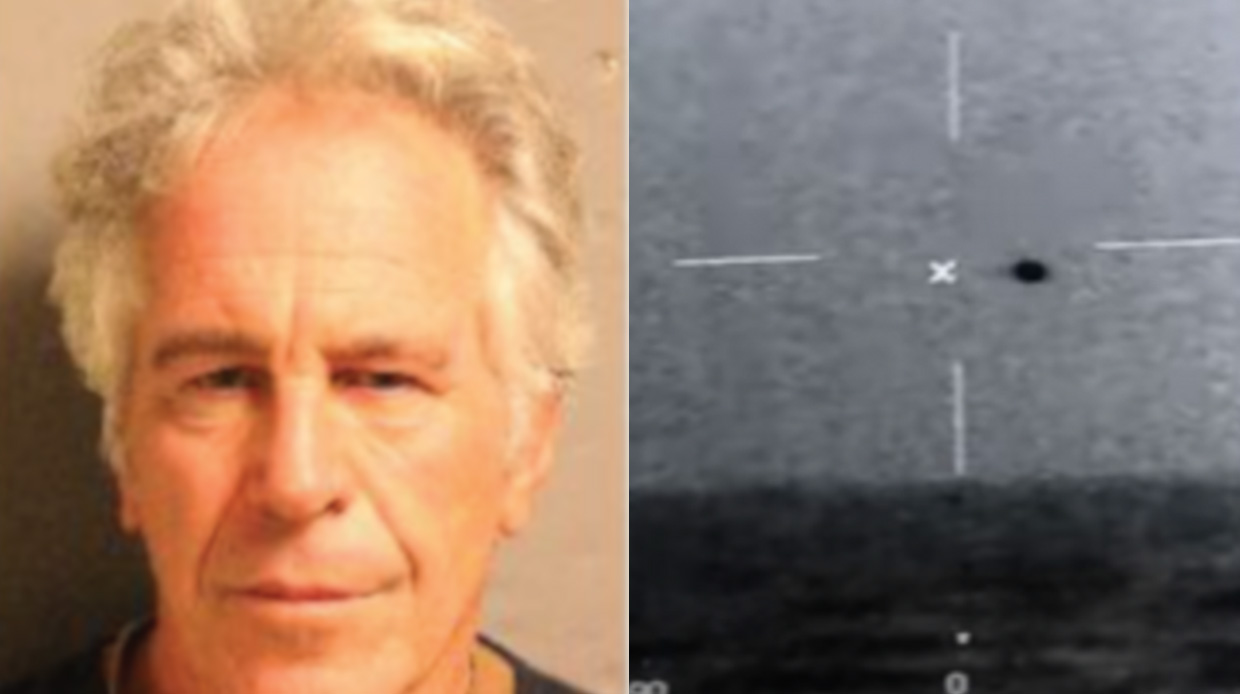
As someone who's spent years following the UAP disclosure movement, watching the Epstein files saga unfold this December has felt uncomfortably familiar. The pattern is almost identical: legislative mandates with clear deadlines, promises of transparency, and then... well, redactions. Lots of redactions. Over 500 pages completely blacked out, to be precise.
It's enough to make you wonder whether we're getting a live preview of how UAP disclosure will actually play out when—or if—it finally arrives.
The Epstein Files Transparency Act, signed into law in November 2025, gave the Department of Justice a straightforward mandate: release all unclassified records within 30 days. That deadline was 19th December. What followed was a masterclass in bureaucratic sleight of hand.
The DoJ did technically release files on schedule. Thousands of pages worth. But when over 500 pages are entirely blacked out and dozens more heavily redacted, you have to ask what "release" actually means in practice. Rep. Thomas Massie, who co-sponsored the legislation, didn't mince words: the release "grossly fails to comply with both the spirit and the letter of the law."
Rep. Ro Khanna went further, calling it an "incomplete release with too many redactions" and threatening impeachment proceedings against Attorney General Pam Bondi. Senate Minority Leader Chuck Schumer summarised the absurdity perfectly: "Simply releasing a mountain of blacked out pages violates the spirit of transparency and the letter of the law."
Sound familiar? It should. Because this is precisely the trajectory that UAP disclosure appears to be following.
The 2024 National Defense Authorization Act established the Unidentified Anomalous Phenomena Records Collection at the National Archives, requiring federal agencies to review, identify, and organise all UAP records for public disclosure. The deadline? October 2024 for initial review, with full transfer of publicly releasable records by September 2025.
Like the Epstein Files Transparency Act, the UAP legislation includes provisions for redactions—but only under narrowly defined circumstances. Records can be withheld or redacted to protect victims (in the Epstein case) or national security (in the UAP case), but these redactions must be accompanied by written justification.
In theory, it's a sensible framework. In practice, if the Epstein files are any indication, we're likely to see a cascade of deferrals, postponements, and classifications that effectively gut the disclosure mandate.
The UAP Disclosure Act already includes a worrying escape clause: records can be postponed for up to 25 years if deemed a threat to national security. The President can extend this period indefinitely. Given what we've just witnessed with the Epstein files—where legal requirements were openly flouted and critics threatened with contempt proceedings—it's not hard to imagine how elastic these timelines might become.
One of the more telling aspects of the Epstein file release was its inconsistency. The same information would be redacted in one document but left visible in another. A 119-page grand jury transcript released on Friday was entirely blacked out; by Saturday, a largely unredacted version appeared. At least 16 files, including photographs of prominent figures, mysteriously vanished from the DoJ's website before being quietly restored.
This selective approach to transparency—releasing just enough to claim compliance whilst withholding the substantive material—is likely to become the standard operating procedure for UAP disclosure. We've already seen glimpses of it. The Pentagon's UAP office has quietly opened an archive of declassified military footage, but the devil is in the details: what footage makes it into the archive, and what remains locked away in classified vaults?
The problem isn't necessarily that certain information needs to be protected. The problem is the lack of accountability in deciding what gets protected and why. When 255 pages are released as a solid black rectangle with no explanation, or when files disappear and reappear without acknowledgment, it suggests an arbitrary process driven by political considerations rather than legitimate security concerns.
Both the Epstein files and UAP disclosure have encountered fierce institutional resistance. President Trump initially tried to block or delay the Epstein file release for months before eventually signing the transparency act. Similarly, various administrations have shown little enthusiasm for UAP disclosure, despite mounting congressional pressure.
The pattern is consistent: create a review board or office with a transparency mandate, then ensure it lacks teeth. The UAP Records Review Board, for instance, was stripped of subpoena powers in the final legislation—a critical oversight mechanism that would have allowed it to compel disclosure from recalcitrant agencies.
What we're seeing is a system designed to appear transparent whilst maintaining maximum control over what information actually reaches the public. Deputy Attorney General Todd Blanche's explanation for the Epstein file delays—that the "volume of materials" necessitated a rolling release—is precisely the kind of bureaucratic reasoning that will be deployed to slow-walk UAP disclosure indefinitely.
UAP disclosure in 2025 has inched closer to reality, but the Epstein precedent suggests that proximity to truth and actual revelation are two very different things.
Perhaps the most telling parallel between the two disclosure processes is the timeline. The Epstein Files Transparency Act mandated immediate release. The UAP legislation allows for postponement of up to 25 years, with presidential discretion to extend further.
Twenty-five years is a generation. It's long enough for whistleblowers to retire, for institutional memory to fade, and for public interest to wane. It's also long enough for the people who made the decisions to classify information in the first place to be safely out of office, beyond accountability.
The Epstein files demonstrate what can happen even with an immediate deadline. Imagine what happens when agencies have a quarter-century to prepare their redactions, compile their justifications, and coordinate their obfuscations. The UFO disclosure timeline we're promised may turn out to be less of a calendar and more of a horizon—always visible, never quite reached.
The Epstein file release isn't just a cautionary tale; it's a template. It shows us how disclosure legislation can be honoured in the breach, how transparency can be weaponised through selective redaction, and how institutional resistance can effectively nullify congressional mandates.
For those following the UAP disclosure movement, the lessons are sobering:
Legislative mandates aren't enough. The Epstein Files Transparency Act had bipartisan support, clear deadlines, and specific requirements. It still resulted in what critics are calling a whitewash. UAP disclosure legislation faces similar—if not greater—institutional resistance.
Redactions will be arbitrary. If the same information can be redacted in one place and visible in another, it suggests the criteria for classification are more political than principled. Expect the same inconsistency with UAP records.
Timelines are suggestions. When agencies can cite "volume of materials" or "review processes" to justify delays, deadlines become meaningless. The 25-year UAP timeline is likely a floor, not a ceiling.
Oversight mechanisms need teeth. Without subpoena power or enforcement mechanisms, review boards become rubber stamps. The triggers pushing us toward UAP disclosure are real, but they need to be backed by genuine accountability.
None of this is to say UAP disclosure is impossible, just that it won't happen simply because a law says it should. The Epstein files have shown us that transparency requires more than legislative language—it requires constant pressure, public attention, and consequences for non-compliance.
Rep. Khanna and Rep. Massie's threats of contempt proceedings and impeachment may seem dramatic, but they represent the kind of escalation necessary to force institutional compliance. Without similar pressure on UAP disclosure, we're likely to see the same pattern: initial releases that generate headlines, followed by years of heavily redacted documents and postponed revelations.
The reality is that disclosure—whether of sensitive files about criminal conspiracies or extraordinary phenomena—is fundamentally a political process. It happens not because agencies suddenly embrace transparency, but because the cost of continued secrecy exceeds the benefits.
The Epstein files may have fallen short of what many hoped for, but they've provided something valuable nonetheless: a realistic preview of how government disclosure actually works when powerful interests prefer opacity. It's not a pretty picture. But forewarned is forearmed.
For those waiting for UAP disclosure, the message is clear: expect incremental releases, heavy redactions, and timelines that stretch toward infinity. But also expect that real progress will come not from trusting the process, but from forcing accountability when the process fails.
The truth may be out there. Getting it into the public domain, it seems, is an entirely different challenge.