


Recent congressional discussions about unidentified aerial phenomena have predominantly focused on national security implications, technological capabilities, and potential foreign adversaries. However, some lawmakers have introduced alternative interpretative frameworks that extend beyond conventional scientific analysis, incorporating spiritual and metaphysical dimensions into the UAP conversation.
Georgia Representative Marjorie Taylor Greene introduced a spiritual interpretation of UAP phenomena during media appearances, suggesting that governmental agencies may be overlooking non-material explanations for unexplained aerial encounters. Her position represents a growing minority viewpoint that seeks to reconcile religious worldviews with the emerging reality of officially acknowledged anomalous phenomena.
Greene's perspective proposes that UAP sightings might represent manifestations of spiritual entities rather than extraterrestrial technology or advanced foreign aircraft. This interpretation draws from theological frameworks that categorize unexplained phenomena within existing religious cosmologies, specifically identifying some encounters as potentially demonic in nature.
This viewpoint raises several significant questions for researchers and the public:
The concept of interpreting aerial anomalies through spiritual or religious frameworks predates modern ufology by centuries. Religious texts across cultures document encounters with beings descending from the sky, aerial vehicles, and otherworldly entities that defy natural explanation.
Ancient religious literature contains numerous descriptions of phenomena that modern readers might classify as UAP encounters:
These historical accounts establish that humanity has long interpreted unexplained aerial phenomena within available spiritual and cultural frameworks, suggesting that spiritual interpretations represent continuity with historical human experience rather than modern innovation.
Within certain Christian theological traditions, unexplained phenomena that demonstrate intelligence but lack clear divine origin may be categorized as demonic deception. This interpretive framework proposes that:
Proponents of this view, including some theologians and religious scholars, argue that dismissing spiritual explanations represents a materialist bias that may prevent comprehensive understanding of the phenomena.
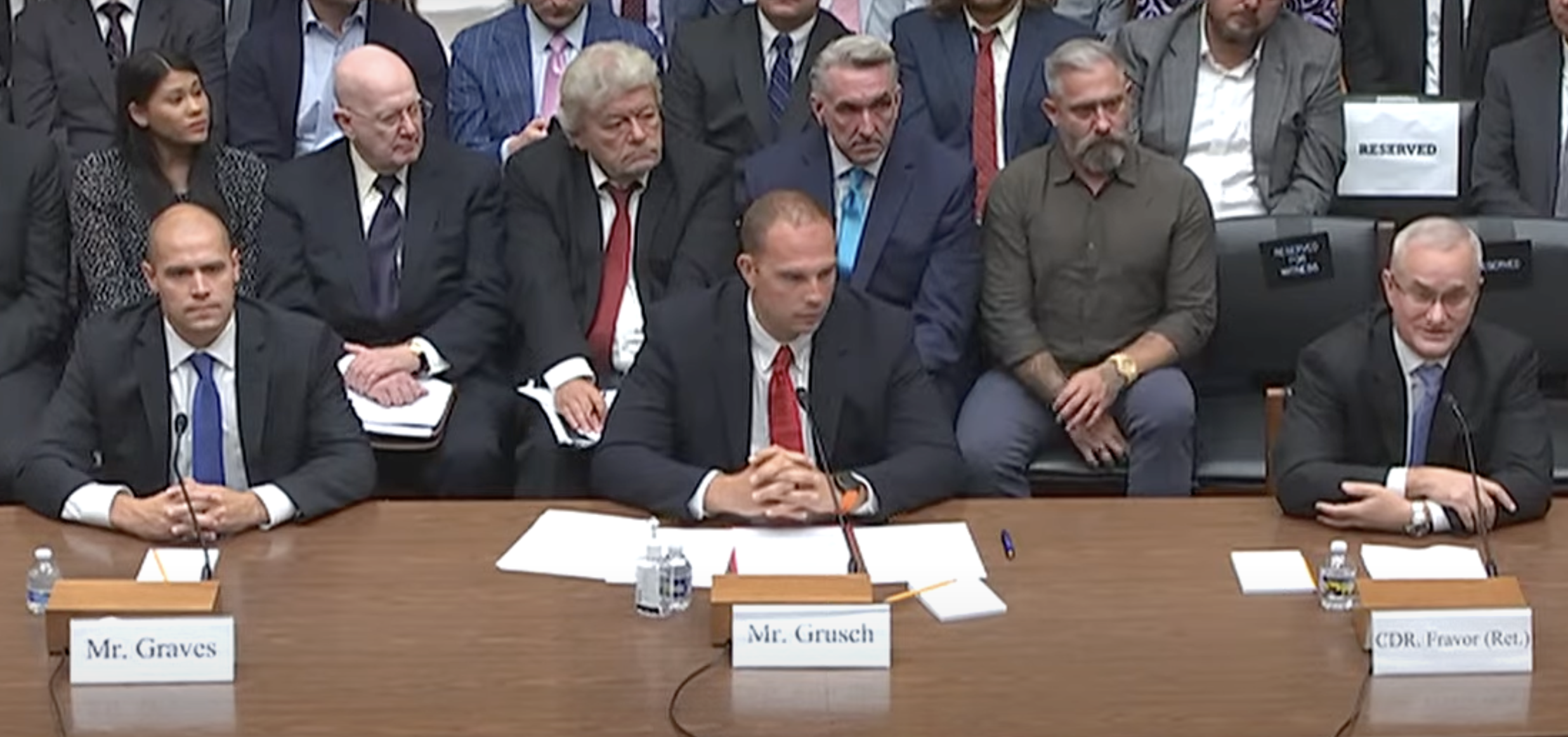
The establishment of the All-domain Anomaly Resolution Office (AARO) and increasing governmental acknowledgment of UAP encounters has opened new questions about how official investigations should approach phenomena that resist conventional explanation.
Current governmental UAP investigation focuses primarily on:
Notably absent from official investigation parameters are metaphysical, spiritual, or consciousness-related dimensions, despite testimony from some witnesses describing psychological or spiritual effects during encounters.
Critics of purely materialist approaches argue that complete understanding requires considering all dimensions of reported experiences, including:
The challenge for governmental investigation lies in maintaining scientific rigor while remaining open to evidence that might not fit conventional frameworks.
Introduction of spiritual interpretations into mainstream UAP discussion has generated significant public reaction, revealing deep divisions in how Americans approach unexplained phenomena.
Segments of the public embrace spiritual interpretations of UAP phenomena, viewing these perspectives as:
Religious communities, particularly evangelical Christians, often find spiritual interpretations more compatible with existing theological frameworks than extraterrestrial hypotheses that challenge traditional creation narratives.
Scientists, skeptics, and secular researchers express concern that spiritual interpretations:
These critics argue that while individuals may personally interpret experiences through spiritual frameworks, governmental investigation and public discourse should maintain separation between empirical observation and religious interpretation.
Some researchers advocate for phenomenological approaches that document all aspects of reported experiences without prejudging their ultimate nature. This methodology:
This approach acknowledges that current understanding may be insufficient to definitively categorize phenomena, whether as technological, biological, psychological, or spiritual in nature.
Debates about spiritual versus materialist interpretations of UAP phenomena reflect deeper cultural tensions about knowledge, authority, and the nature of reality.
The UAP discourse has become another arena where longstanding American tensions between scientific and religious worldviews manifest. This reflects broader societal questions about:
Congressional involvement in UAP investigation raises questions about governmental authority over defining reality. When elected officials make statements about the nature of phenomena, they:
The challenge lies in maintaining governmental transparency while respecting epistemic humility about phenomena that remain genuinely unexplained.
The demonological interpretation represents only one spiritual framework among many that people apply to UAP phenomena.
Some spiritual traditions propose that extraterrestrial visitors represent advanced spiritual beings rather than merely technological civilizations. This view suggests:
Another perspective proposes that UAP phenomena represent manifestations of consciousness itself, suggesting:
Native American and other indigenous traditions often view aerial phenomena within existing cosmological frameworks that:
These perspectives remind us that Western materialism represents one epistemological framework among many, not necessarily the most comprehensive for understanding complex phenomena.
The future of UAP research may require accommodation of multiple interpretative frameworks operating simultaneously.
Comprehensive UAP research might benefit from principles that:
Healthy public discussion about UAP phenomena requires:
Marjorie Taylor Greene's introduction of spiritual interpretations into congressional UAP discourse highlights fundamental questions about how humanity approaches unexplained phenomena. While her specific theological framework may not resonate with all Americans, her participation in the conversation reflects broader cultural reality: millions of people understand their experiences and observations through spiritual lenses.
The challenge for serious UAP investigation lies not in choosing between scientific and spiritual frameworks but in developing methodologies that can accommodate genuine uncertainty. The phenomena themselves resist easy categorization, demonstrating characteristics that challenge materialist assumptions while also resisting facile spiritual explanations.
Whether UAP ultimately prove to be advanced technology, natural phenomena, manifestations of consciousness, spiritual entities, or something entirely unexpected, the investigation requires intellectual humility and openness to evidence regardless of its implications. Dismissing spiritual perspectives as inherently unscientific risks excluding data and interpretations that might prove crucial to understanding.
Similarly, abandoning empirical rigor in favor of unfalsifiable spiritual claims would undermine the systematic investigation necessary for genuine progress. The path forward likely requires holding these tensions productively, maintaining both scientific discipline and openness to dimensions of reality that current frameworks may inadequately address.
As governmental disclosure continues and public awareness grows, the conversation about UAP will necessarily include diverse voices bringing varied perspectives. The maturity with which society navigates these discussions—respecting both empirical evidence and human meaning-making through spiritual frameworks—will determine whether UAP investigation advances understanding or devolves into tribal conflict.
The mystery remains. The investigation continues. And humanity must decide whether it can approach the unknown with both rigor and humility, scientific discipline and spiritual openness, critical thinking and respect for diverse ways of knowing.