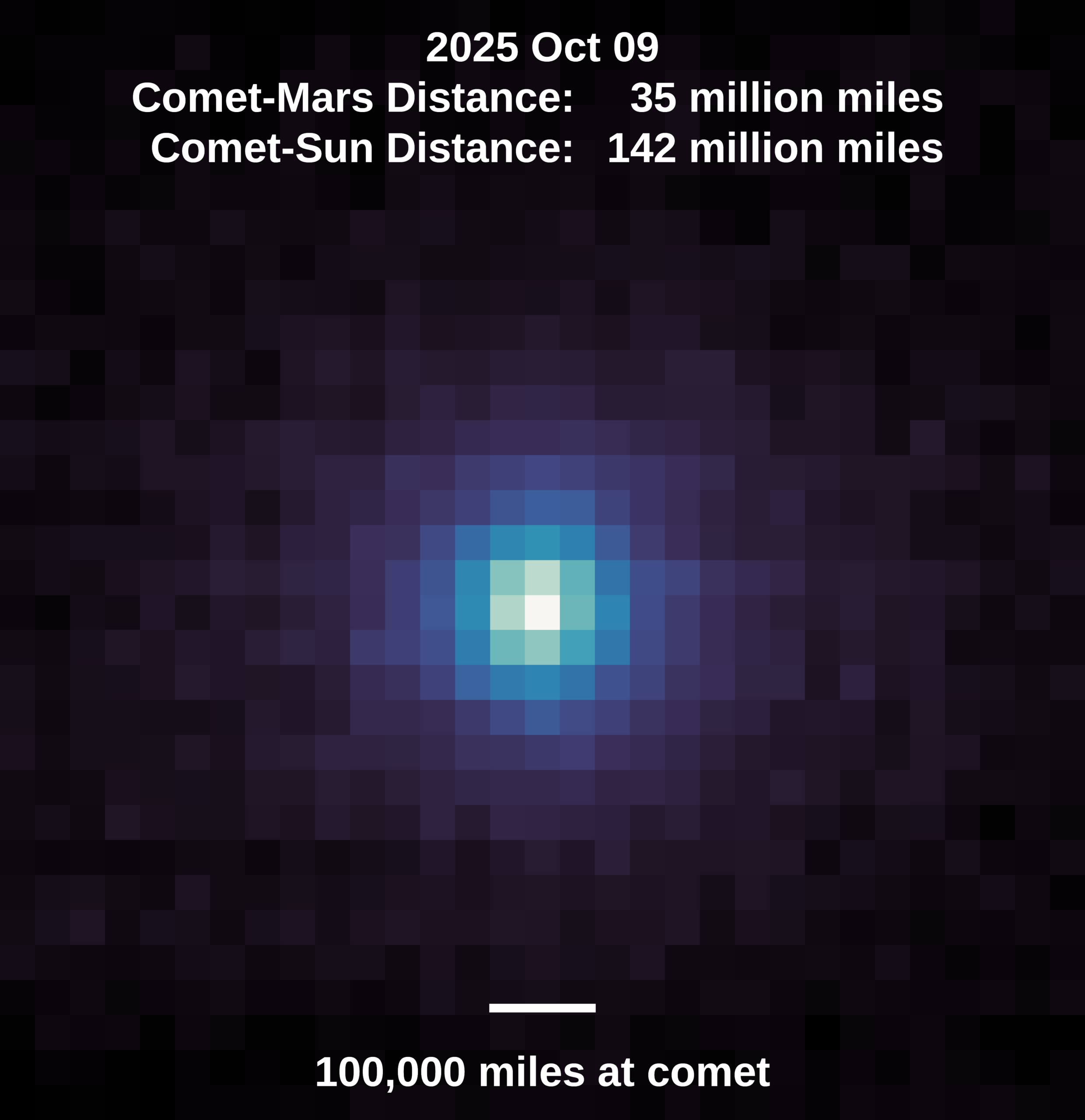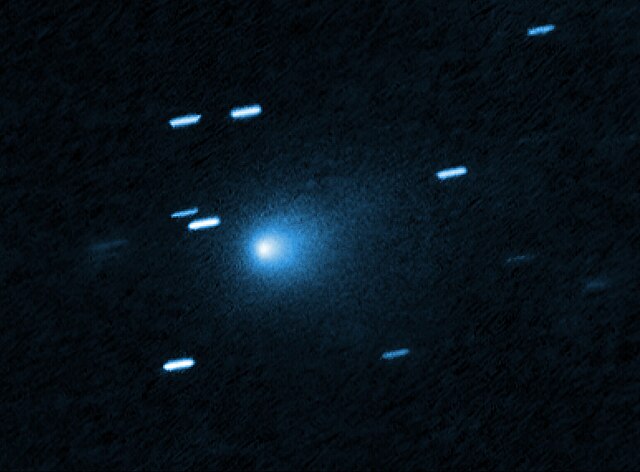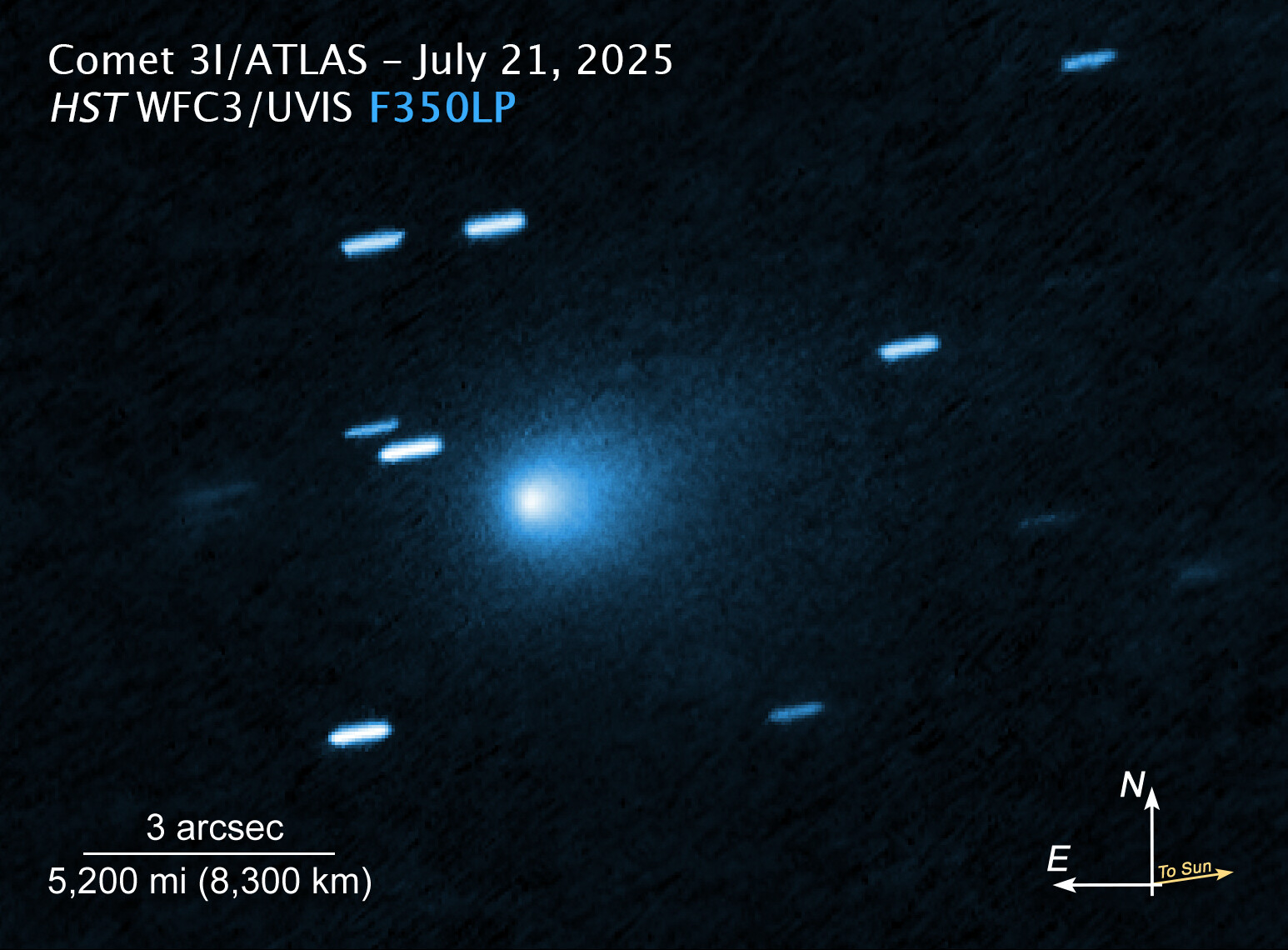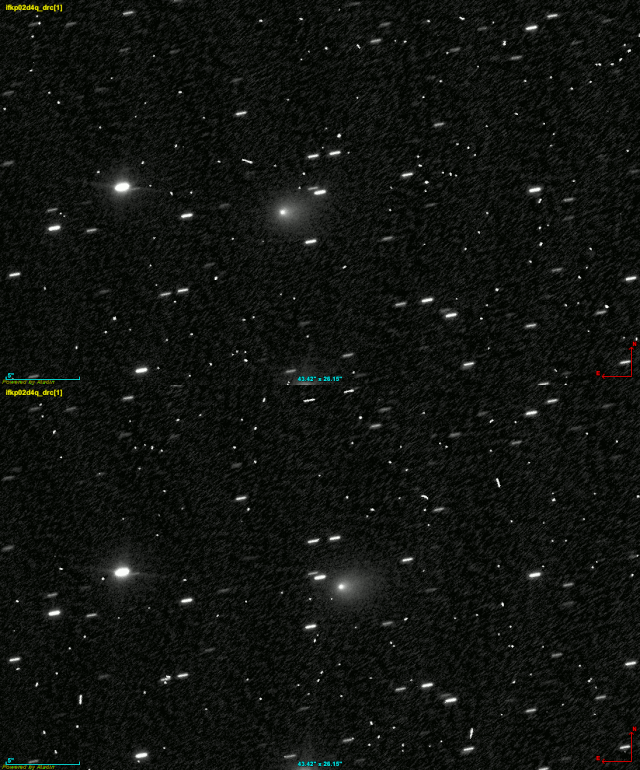


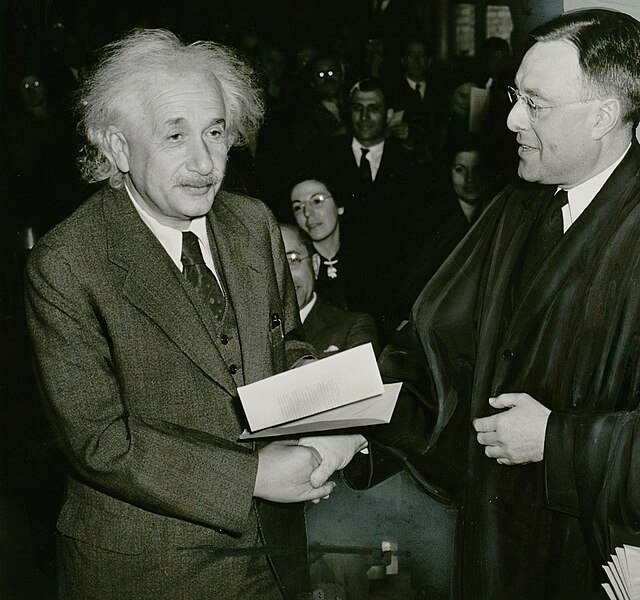
This discovery not only showcases the predictive power of Einstein's work but also raises fascinating questions about interstellar objects and their journey through our cosmic neighborhood.
Einstein's general relativity fundamentally transformed our understanding of gravity and space-time. The theory proposes that massive objects create curvature in the fabric of space-time, which we experience as gravitational force. While this concept has been validated through observations of planets, stars, and black holes, 3I/ATLAS now extends this confirmation to the realm of interstellar visitors passing through our solar system.
Since its initial detection, 3I/ATLAS has captivated astronomers worldwide as one of the rare interstellar objects to traverse our solar system. This comet-like visitor has presented scientists with an unprecedented opportunity to study material and dynamics from beyond our stellar neighborhood. As it approached the sun, researchers observed intriguing changes in its trajectory that sparked intense scientific debate about its composition and origins.
For a comprehensive understanding of this mysterious visitor, explore our complete guide to 3I/ATLAS and its approach to Earth.
The trajectory and behavior of 3I/ATLAS have provided scientists with real-world validation of Einstein's predictions. As the object passed close to our sun, it experienced a gravitational slingshot effect—a phenomenon precisely aligned with general relativity's forecasts. Observations confirmed that the sun's massive gravitational field bent the object's path exactly as Einstein's equations predicted over a century ago.
While 3I/ATLAS confirms Einstein's theory, certain unexpected characteristics have intrigued the scientific community. The object has exhibited surprising brightening patterns and trajectory variations that don't entirely match conventional comet behavior. Some researchers have even speculated whether this interstellar traveler could be something more exotic than a simple space rock—though such hypotheses remain highly controversial within the scientific community.
Additionally, NASA's discovery of water on 3I/ATLAS has added another layer of intrigue to this cosmic visitor's profile.
Studying interstellar objects like 3I/ATLAS offers far-reaching implications beyond confirming theoretical physics. These cosmic travelers serve as messengers from distant solar systems, potentially carrying invaluable information about planetary formation, stellar evolution, and the chemical composition of other star systems. Each interstellar visitor acts as a time capsule, preserving conditions from regions of space billions of miles away.
The insights gained from 3I/ATLAS could shape humanity's approach to interstellar exploration. As technology advances and proposed missions like Breakthrough Starshot move closer to reality, understanding how interstellar objects behave and what they're composed of becomes increasingly crucial. Prominent scientists, including Harvard astronomer Avi Loeb, have shared their perspectives on what 3I/ATLAS might teach us about venturing beyond our solar system.
3I/ATLAS represents far more than a fleeting astronomical observation—it's a bridge connecting Einstein's theoretical predictions with observable cosmic phenomena. While confirming the robustness of general relativity, this interstellar visitor simultaneously challenges scientists with new questions about the nature of objects traveling between star systems. As we continue studying 3I/ATLAS and future interstellar visitors, each discovery brings us closer to understanding the vast, interconnected universe we inhabit.
Subscribe to receive the latest updates on interstellar objects, astrophysics breakthroughs, and discoveries that continue reshaping our understanding of the cosmos. The universe holds countless secrets waiting to be unveiled.