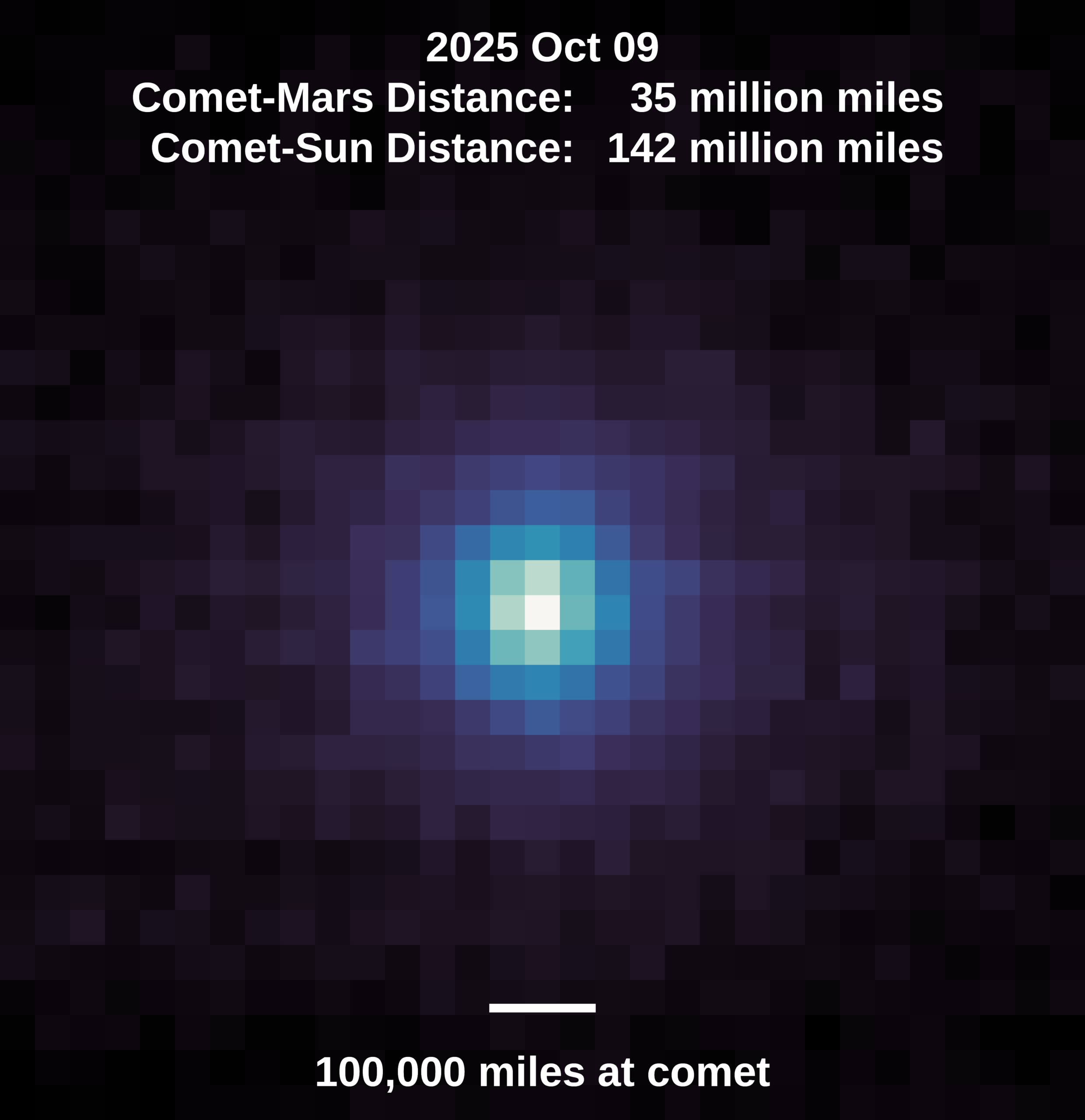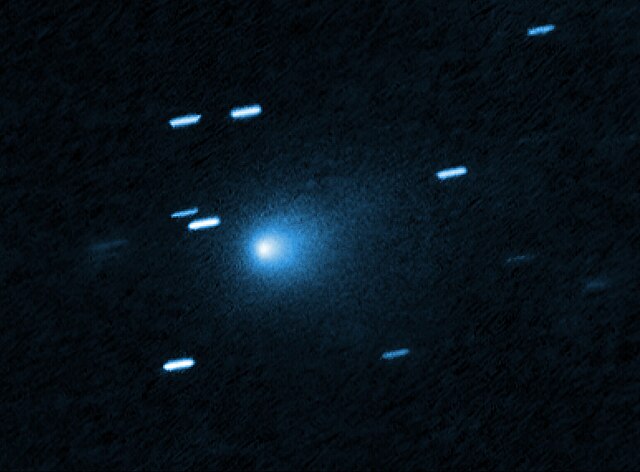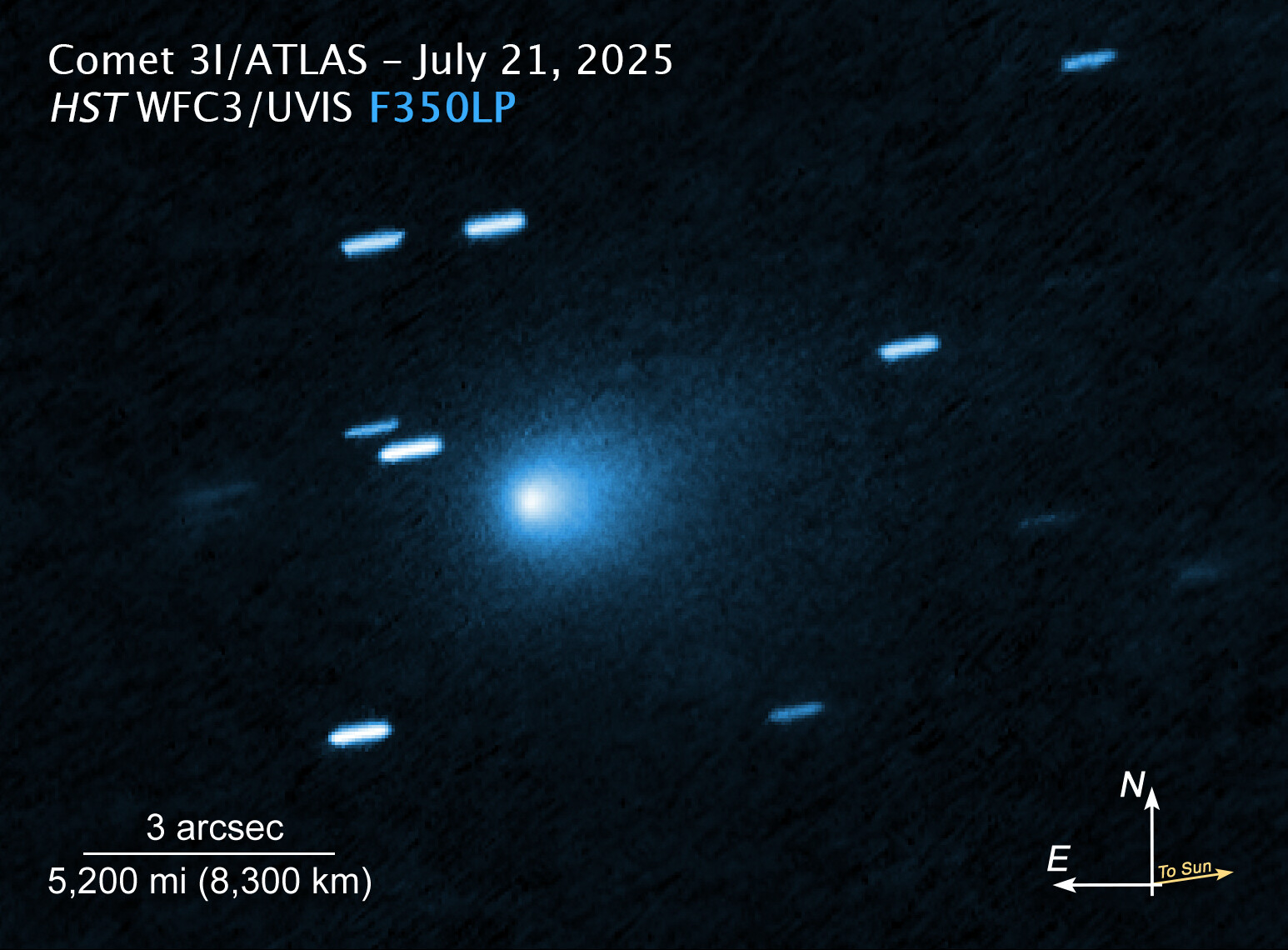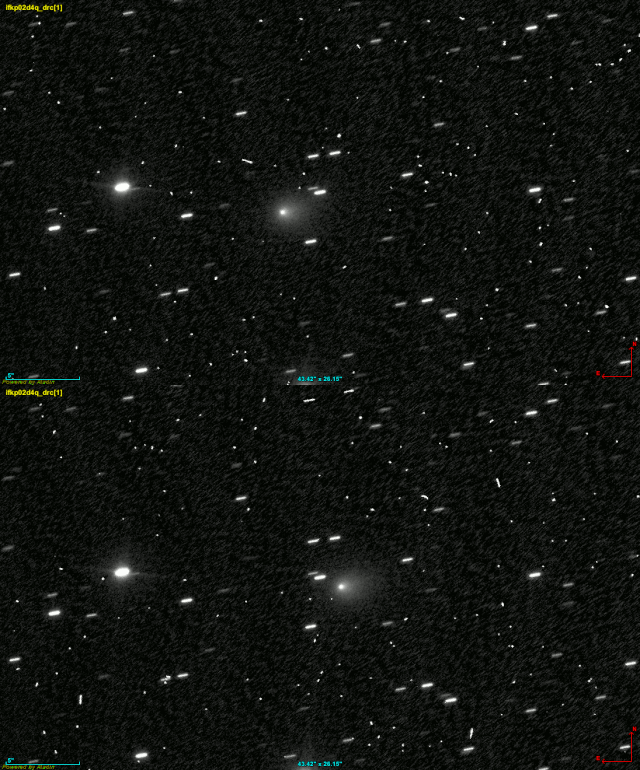



This enigmatic visitor, which disappeared behind the Sun during its perihelion passage, has now returned to observable space with characteristics that challenge our understanding of interstellar objects and their behavior within our solar system.
Interstellar comet 3I/ATLAS first captured astronomical attention as only the third confirmed object from beyond our solar system to visit our cosmic backyard. Following in the footsteps of 'Oumuamua and comet 2I/Borisov, this celestial wanderer has proven far more cooperative with scientific observation, providing researchers with invaluable data about the composition and behavior of interstellar material.
After vanishing from telescope view during its closest approach to the Sun—a period astronomers refer to as solar conjunction—3I/ATLAS has reemerged with unexpected vigor. The comet's survival of this intense solar encounter was not guaranteed, as many comets fragment or disintegrate when subjected to the extreme heat and gravitational forces near our star.
Unlike 'Oumuamua, which zipped through our solar system before astronomers could conduct detailed analysis, 3I/ATLAS has provided sustained observation opportunities. Its orbital trajectory brought it close enough for comprehensive spectroscopic analysis while maintaining sufficient distance to avoid the complete vaporization that claims many sungrazing comets.
The object's designation as "3I" confirms its interstellar origin—the "I" standing for interstellar, with the number indicating it's the third such confirmed visitor. The "ATLAS" portion comes from the Asteroid Terrestrial-impact Last Alert System in Hawaii, which first detected the object approaching our solar system.
When 3I/ATLAS passed behind the Sun from Earth's perspective, it entered what astronomers call superior conjunction. During this period, the comet was effectively hidden from ground-based observation, positioned on the opposite side of the Sun from our planet. This solar occultation lasted several weeks, during which the fate of the comet remained uncertain.
The perihelion passage—the point of closest approach to the Sun—subjects comets to extraordinary stress. Temperatures can exceed thousands of degrees, while intense solar radiation bombards the icy nucleus. Many comets don't survive this ordeal, fragmenting into debris fields or evaporating entirely.
That 3I/ATLAS has reemerged intact suggests a robust internal structure. Analysis of its post-perihelion behavior reveals several intriguing characteristics:
Perhaps the most scientifically valuable aspect of 3I/ATLAS is what its composition reveals about conditions in other stellar systems. Each interstellar visitor carries within its frozen matrix a record of the environment where it formed, potentially billions of years ago and light-years away.
Preliminary spectroscopic analysis has identified several noteworthy characteristics that distinguish 3I/ATLAS from native solar system objects:
Water abundance: NASA observations have confirmed significant water content within the comet's nucleus, though the isotopic ratios differ slightly from typical solar system comets. This suggests formation in a stellar environment with different deuterium-to-hydrogen ratios than our own Sun's nebula.
Organic complexity: The detection of complex organic molecules in the comet's coma—the gaseous envelope surrounding the nucleus—provides insights into prebiotic chemistry occurring in distant stellar systems. These molecules represent the building blocks of life, suggesting that the chemical prerequisites for biology may be common throughout the galaxy.
Unexpected volatiles: The comet exhibits unusual ratios of volatile compounds compared to solar system standards, including anomalous carbon monoxide and carbon dioxide signatures that point to formation in a colder or chemically distinct protoplanetary disk.
One of the most intriguing aspects of 3I/ATLAS's post-perihelion behavior is its unexpected brightening. Astronomers initially predicted that the comet would emerge from solar conjunction at a specific magnitude based on its pre-perihelion brightness and known cometary behavior. Instead, the object has proven significantly more luminous than expected.
Several hypotheses attempt to explain this anomaly:
The successful tracking and analysis of 3I/ATLAS represents a milestone in humanity's ability to study interstellar visitors. Each such object provides a free sample of extrasolar material, eliminating the need for expensive interstellar missions while still accessing material from other star systems.
With three confirmed interstellar objects now documented, astronomers are beginning to develop statistical understanding of how common these visitors might be. Current estimates suggest that at any given time, several interstellar objects may be passing through the inner solar system, though most go undetected due to their small size or unfavorable viewing geometry.
The Vera C. Rubin Observatory, scheduled to begin full operations soon, will dramatically increase detection rates. This facility's unprecedented sky coverage and sensitivity should identify numerous interstellar visitors, potentially cataloging dozens or even hundreds per year once fully operational.
One of the most tantalizing questions surrounding 3I/ATLAS concerns its stellar birthplace. Tracing an interstellar object's trajectory backward through space and time remains extraordinarily challenging due to gravitational perturbations from passing stars and galactic tidal effects over millions of years.
However, the comet's velocity vector and trajectory provide clues. Analysis suggests 3I/ATLAS likely originated from a star system located in the direction of the constellation Ursa Major, though pinpointing a specific stellar source remains beyond current capabilities. The object has been traveling through interstellar space for potentially millions of years before its chance encounter with our solar system.
As 3I/ATLAS continues its outbound journey from the Sun, astronomers worldwide are maximizing observation opportunities before the comet fades beyond detection limits. Each additional data point helps refine understanding of this mysterious visitor and interstellar objects generally.
The astronomical community has mobilized resources to extract maximum scientific value from 3I/ATLAS while it remains observable:
The study of 3I/ATLAS fits within humanity's expanding capability to understand our cosmic context. These interstellar messengers provide glimpses into the diversity of planetary systems throughout the galaxy, offering insights into star formation, planetary evolution, and the distribution of life's chemical prerequisites across space.
Harvard astronomer Avi Loeb and others have emphasized the importance of rapid-response protocols for future interstellar object detection. The brief window of opportunity for detailed study means that astronomical infrastructure must be prepared to pivot quickly when new visitors arrive.
The reappearance of interstellar comet 3I/ATLAS following its solar encounter marks more than just a successful astronomical observation—it represents humanity's growing ability to study material from beyond our stellar neighborhood without leaving Earth's vicinity. This cosmic wanderer, forged in the disk of a distant star billions of years ago, has survived an epic journey across the interstellar void to briefly illuminate our understanding of galactic chemistry and planetary system formation.
As the comet continues its outbound trajectory, eventually returning to the dark expanse between stars, it carries with it secrets still undisclosed. The data gathered during its passage will fuel scientific analysis for years, contributing to our understanding of how common interstellar visitors might be and what they can teach us about the galaxy's chemical and physical diversity.
The successful observation of 3I/ATLAS proves that we stand at the threshold of a new era in astronomy—one where interstellar objects are no longer theoretical curiosities but regular subjects of scientific investigation. Each visitor brings samples from distant stellar neighborhoods, expanding our understanding of the cosmos one comet at a time.
The solar system's door remains open, and the next interstellar visitor may already be approaching, carrying new mysteries from the depths of space.