

In a groundbreaking yet closely scrutinized statement, Harvard professor Avi Loeb recently shared insights regarding Elon Musk's contemplation on the origins of interstellar object 3I/ATLAS. Musk’s perspectives have sparked fresh dialogues around this celestial object, encouraging both scientists and the general public to keep an open mind towards our universe's mysteries.
Avi Loeb is the chair of the Department of Astronomy at Harvard University and is known for his controversial views on extraterrestrial life. His work has often pushed the boundaries of conventional science, prompting both admiration and skepticism from his peers.
The 3I/ATLAS interstellar object, which made headlines following its discovery, became a point of interest for not just astronomers but also tech moguls like Musk, highlighting how space exploration captivates minds across all fields. Interstellar objects, defined as those that originate from outside our solar system, offer unique insights into the formation of planets and their potential for harboring life.
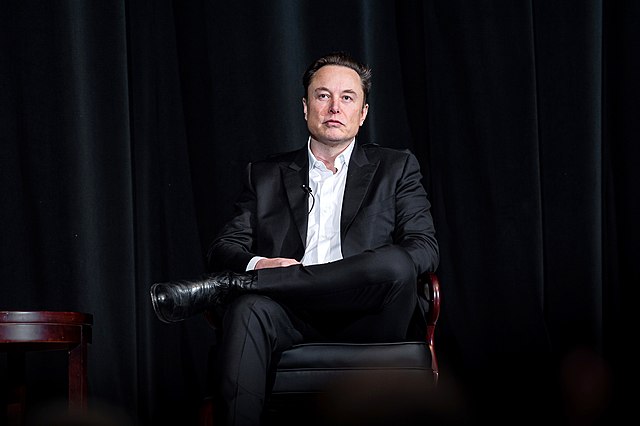
Elon Musk, the CEO of SpaceX and Tesla, is known for his influential role in space exploration. His comments on 3I/ATLAS reflect a broader, more open approach towards understanding such cosmic phenomena. Musk suggests that we need to explore every possibility regarding the origins of interstellar objects, advocating for a shift in human perspective towards the universe.
While many appreciate Musk's open-minded approach, there are skeptics in the scientific community. Critics argue that while it is essential to keep an open mind, hypotheses must be grounded in scientific evidence. Loeb’s support for Musk underscores a shared belief in the necessity of exploring all avenues of inquiry—something that is crucial in the ever-evolving field of astrophysics.
Understanding interstellar objects like 3I/ATLAS opens a treasure trove of possibilities regarding our place in the universe. If objects like these contain signs of extraterrestrial life or materials that can transform our technological landscape, the implications could be far-reaching.
The search for extraterrestrial life is no longer relegated to science fiction. As space missions advance, Loeb and others are advocating for a systematic search for signs of life beyond Earth. With interstellar objects providing fragments of their origins, astronomers may be closer than ever to answering the longstanding question—are we alone in the universe?
Loeb notes that public interest in such topics is crucial for advancing scientific research. When high-profile figures like Elon Musk weigh in on discussions about interstellar objects, it has the power to galvanize public engagement and support for space exploration endeavors.
Avi Loeb's appreciation of Elon Musk's remarks serves as a reminder of the significance of staying inquisitive about our universe. The perspectives shared about interstellar objects like 3I/ATLAS pave the way for future discoveries and a more profound understanding of the cosmos. As both academia and technology converge, the possibilities for vibrant exploration are limitless, and the dialogue between visionaries like Loeb and Musk is vital for continual advancement.