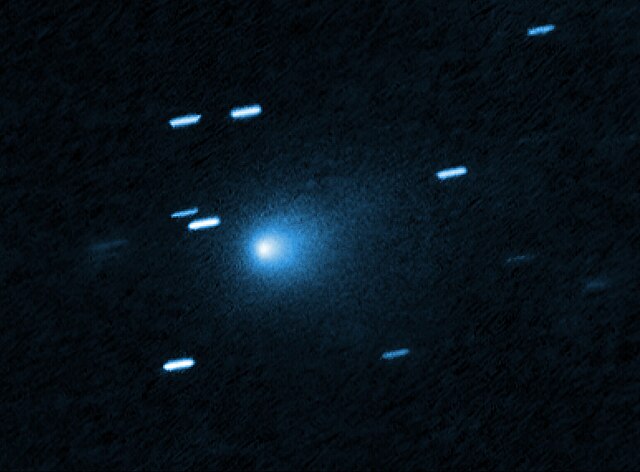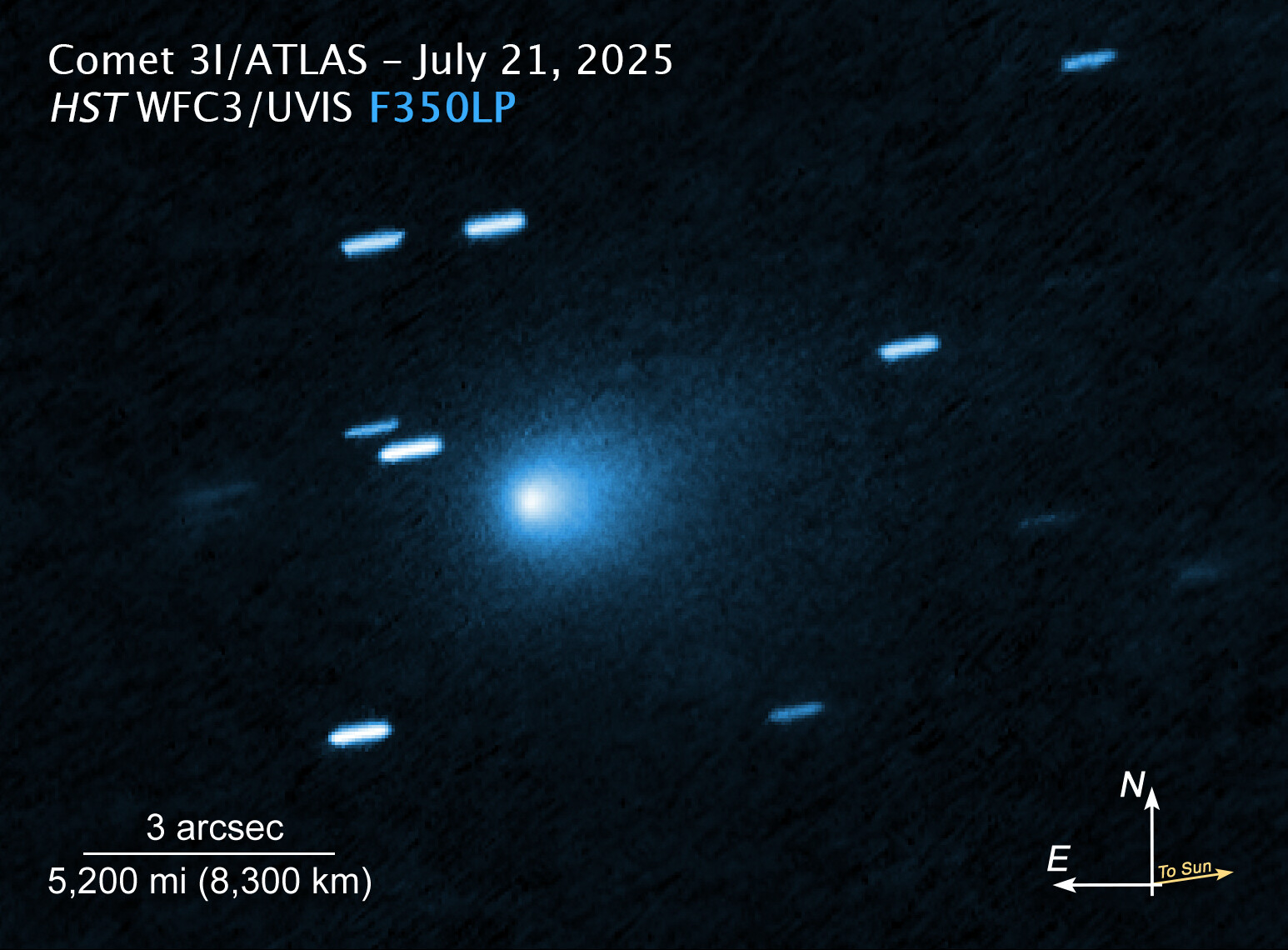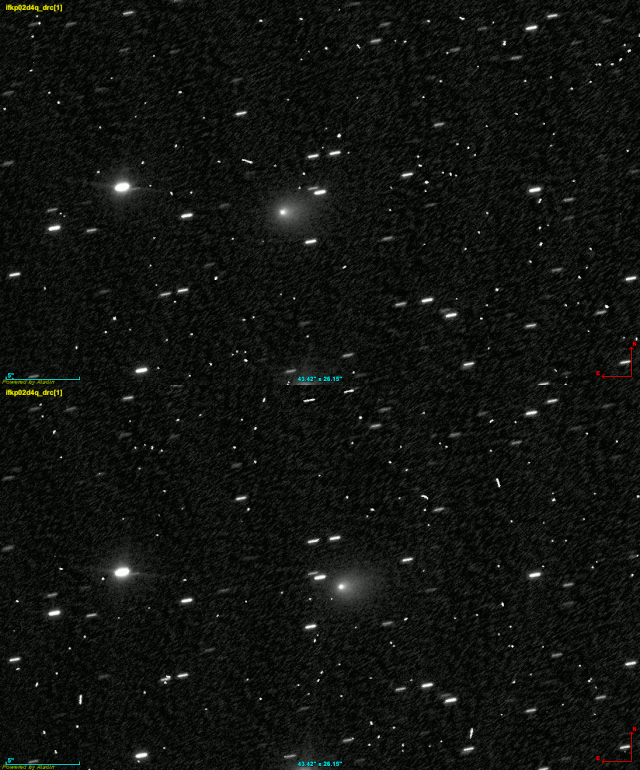


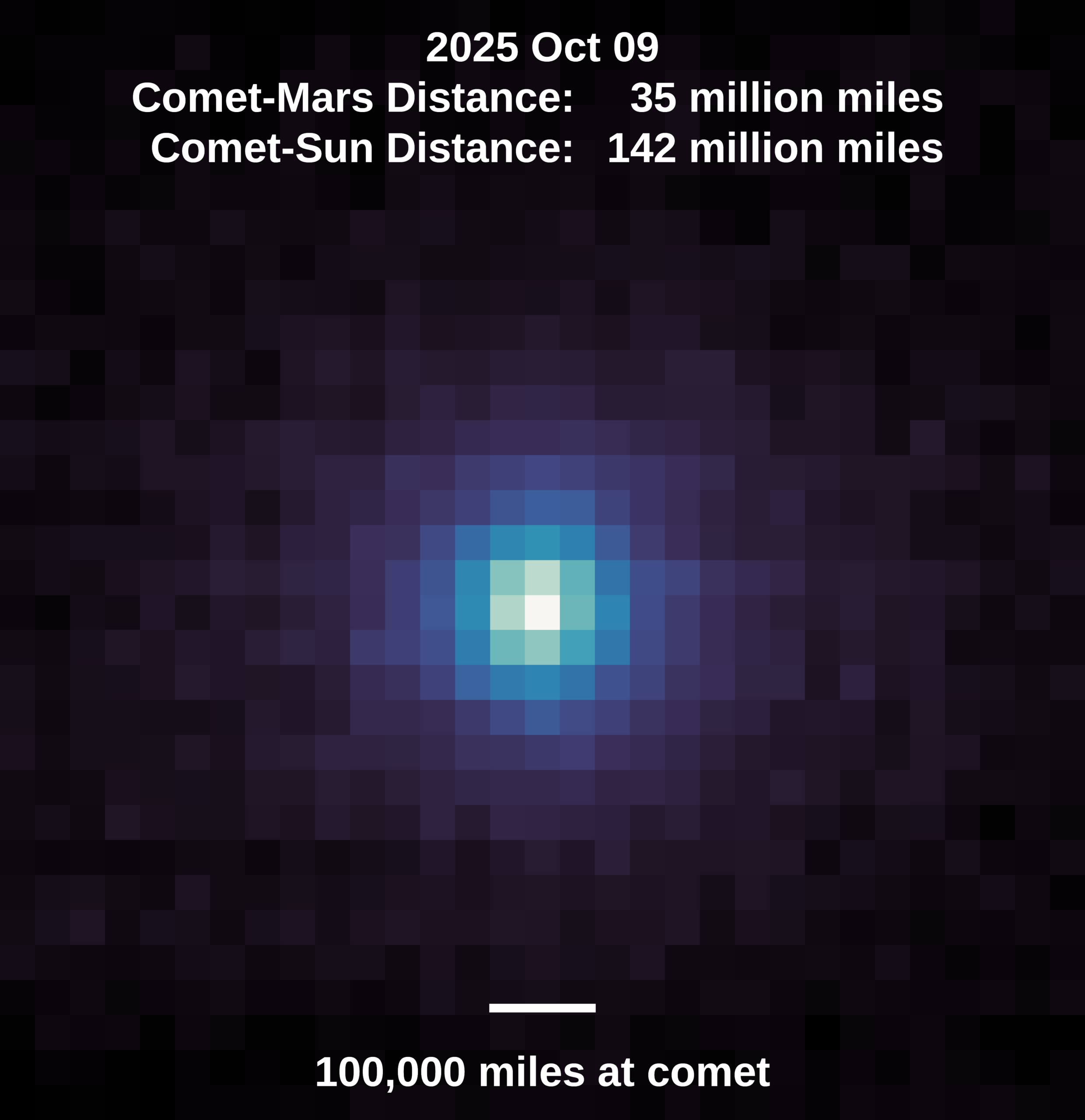
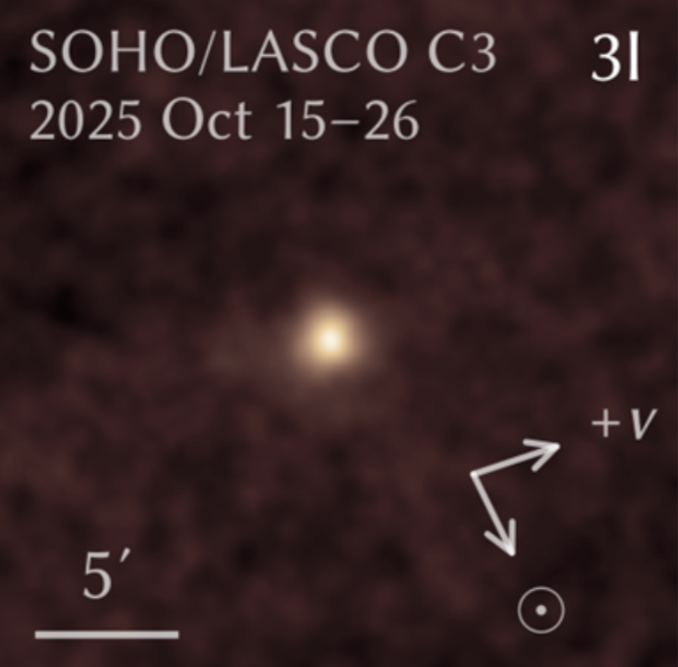
The images themselves are rather extraordinary, if not always immediately spectacular to the untrained eye. Captured between September and October 2025 by an array of NASA missions—including spacecraft at Mars, Earth orbit, and deep space—they show 3I/ATLAS as a bright point of light surrounded by a hazy coma of gas and dust. Some images reveal a faint tail stretching away from the comet's nucleus, whilst others show it as little more than an illuminated smudge against the stellar backdrop.
What makes these new observations particularly valuable is the sheer variety of perspectives they provide. The High Resolution Imaging Science Experiment (HiRISE) camera aboard NASA's Mars Reconnaissance Orbiter captured close-up views from roughly 19 million miles away on October 2nd—amongst the nearest looks any NASA spacecraft is expected to get. Meanwhile, the MAVEN orbiter contributed ultraviolet imagery revealing hydrogen atoms streaming from the comet, providing crucial data about its chemical composition.
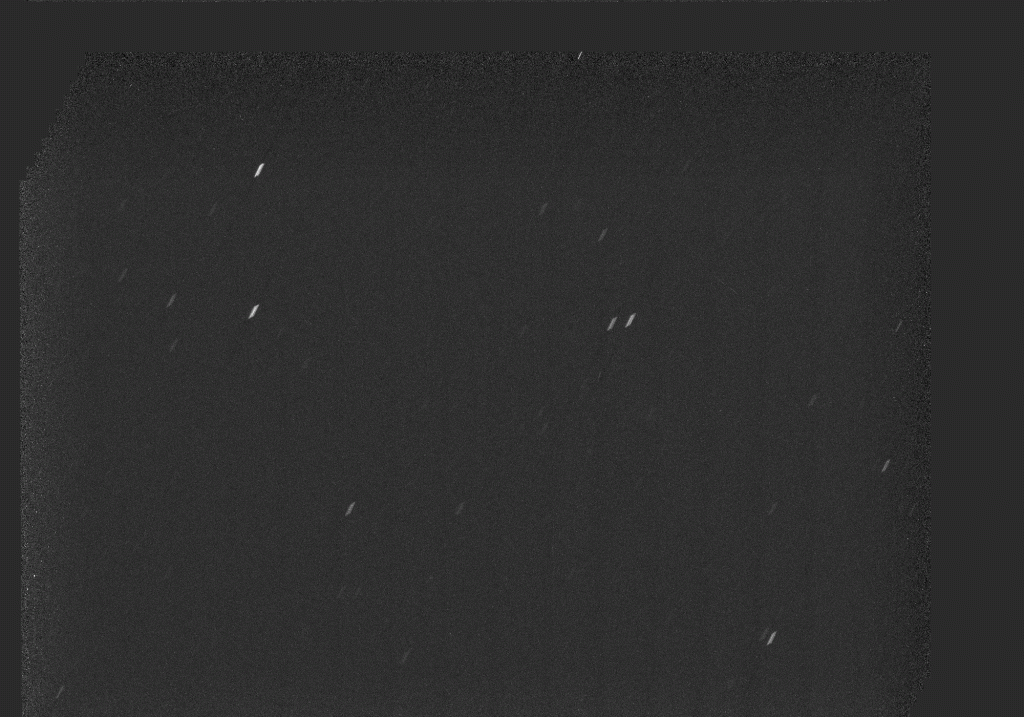
Even NASA's Perseverance rover got in on the action, pausing its exploration of Jezero Crater to snap images of the cosmic interloper. The comet appeared as a faint smudge against a background of star trails—hardly Instagram-worthy, perhaps, but scientifically invaluable. Further afield, the Lucy and Psyche spacecraft, both on their way to study asteroids, tracked 3I/ATLAS over several hours, helping astronomers refine its trajectory.
Stacked images from NASA's STEREO-A spacecraft show 3I/ATLAS hurtling through space at a frankly ludicrous 130,000 miles per hour. Current estimates place the comet's nucleus somewhere between a few thousand feet and a couple of miles in diameter—though scientists are still working to pin down more precise measurements. It's not enormous, but it's certainly substantial enough to have caught the attention of astronomers worldwide.
The data has already proven useful beyond mere imagery. Observations from the European Space Agency's ExoMars Trace Gas Orbiter, which was about ten times closer to the comet than Earth-based telescopes during its Mars flyby, enabled scientists to predict 3I/ATLAS's future path with a tenfold improvement in accuracy. That's rather important when you're dealing with an object on a hyperbolic trajectory that will eventually leave our solar system for good.
Of course, we'd be remiss not to mention the weeks of online speculation that preceded this release. NASA faced mounting pressure to release the data, particularly during the government shutdown when the agency was unable to comment publicly. Some observers—including Harvard astronomer Avi Loeb—raised questions about the comet's unusual characteristics, with various figures offering their own interpretations.
NASA officials were quick to address the more, shall we say, creative theories. "It looks and behaves like a comet, and all evidence points to it being a comet," said NASA Associate Administrator Amit Kshatriya at yesterday's briefing. Nicky Fox, associate administrator of NASA's Science Mission Directorate, was similarly direct: "We certainly haven't seen any techno signatures or anything from it that would lead us to believe it was anything other than a comet."
Still, Fox acknowledged the public fascination. "The super cool thing is not that it's exactly like all the comets that we see in our solar system," she noted. And that's the crux of it, really—3I/ATLAS is remarkable precisely because it isn't from our solar system, even if it appears to follow all the expected rules of cometary behaviour.
The images reveal several intriguing features that scientists are now working to understand. For those interested in the technical details, the comet's non-gravitational acceleration patterns have been particularly noteworthy. The ultraviolet observations from MAVEN show hydrogen emission from the comet—a telltale sign of water vapour being released as the Sun warms its icy nucleus.
Earlier Hubble Space Telescope imagery from July had revealed something rather curious: an anomalous anti-tail extending toward the Sun rather than away from it. The new HiRISE images from Mars Reconnaissance Orbiter provide a different angle on this feature, potentially offering insights into the comet's rotational dynamics and jet activity. It's the sort of thing that makes planetary scientists rather excited, even if it doesn't quite have the dramatic flair of an alien mothership.
For those following along at home, 3I/ATLAS will make its closest approach to Earth on December 19th, though "close" is a relative term—it'll still be roughly 170 million miles away. After that, it will continue on its hyperbolic trajectory, eventually leaving our solar system permanently. This is, in all likelihood, our only chance to study this particular visitor from another stellar system.
Scientists are now analysing the wealth of data collected to better understand the comet's composition, structure, and origins. Where exactly did it come from? How long has it been travelling through interstellar space? These questions remain tantalizingly unanswered. As Tom Statler, NASA's lead scientist for solar system small bodies, put it: "This is a new scientific opportunity, and it's a new window into the makeups and histories of other solar systems. We're just beginning to learn about these types of objects and figure out what are the right questions we should ask about them."
For readers wanting a deeper dive into what makes 3I/ATLAS so unusual, or curious about what this cosmic visitor reveals about our solar system, there's no shortage of analysis to explore. But for now, we can at least appreciate these newly released images for what they represent: humanity's best look yet at a traveller from the vast darkness between the stars.
And no, it's not an alien spacecraft. Though one suspects that won't stop some corners of the internet from hoping otherwise.
You can see NASA's full gallery of 3I/ATLAS images here.