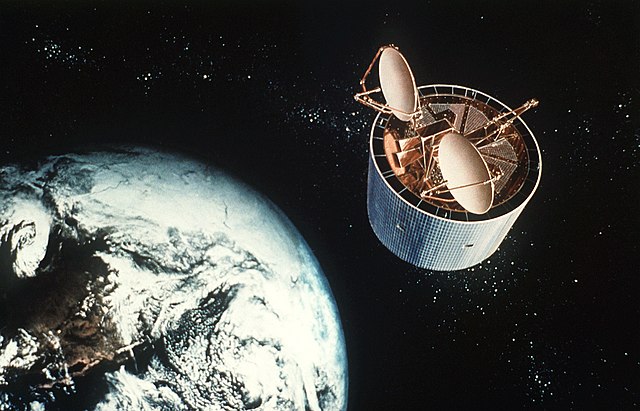



It's the sort of thing that sounds ripped from a disaster film, but it's playing out in real-time, 260 miles above our heads. Three Chinese astronauts — Wang Jie, Chen Zhongrui, and Chen Dong — are temporarily stranded aboard the Tiangong space station after their return capsule was struck by what's believed to be orbital debris. Their scheduled departure on 5th November has been indefinitely postponed whilst engineers assess whether their ride home is still fit for purpose.
The crew, part of the Shenzhou-20 mission, launched from the Jiuquan Satellite Launch Centre back in April and have already spent six months in orbit. They'd completed their handover to the incoming Shenzhou-21 crew, their bags were presumably packed (metaphorically speaking), and they were hours away from beginning their return journey when the incident occurred. Now, both crews find themselves sharing the space station — a scenario that wasn't exactly part of the flight plan.
The China Manned Space Agency has been understandably cautious in its public statements. "The Shenzhou-20 crewed spacecraft is suspected to have been struck by a small piece of orbital debris, and assessment of the impact and associated risks is currently under way," the agency announced. What they haven't revealed is whether the capsule was hit whilst docked to Tiangong or during some other phase of operations. That ambiguity alone tells you something about the precariousness of the situation.
The incident throws into sharp relief a problem that's been quietly escalating for decades: space junk. And I do mean escalating. According to the European Space Agency, there are currently 14.5 million kilograms of man-made debris circling the planet. That's roughly the weight of two thousand London double-decker buses, if you need a mental image, except these buses are travelling at speeds that would make a rifle bullet look sluggish.
SpaceX's Starlink satellites alone had to perform evasive manoeuvres 144,404 times in the first half of 2025 — that's one collision warning roughly every couple of minutes, day and night, for six months straight. Three times the rate of the previous six-month period. It's the sort of statistic that ought to give anyone pause.
The stuff up there ranges from dead satellites and spent rocket stages to paint flecks and tools dropped during spacewalks. These objects move at speeds of up to 17,000mph — velocity enough to turn even the smallest fragment into a potentially lethal projectile. China's Tiangong has felt the sting before. In 2023, one of the station's solar panels was struck by debris, causing a partial power outage. Additional shielding has since been added, but clearly, that's not a complete solution.
There's a term that haunts everyone who thinks seriously about orbital sustainability: Kessler Syndrome. Named after NASA scientists Donald J. Kessler and Burton G. Cour-Palais, who described it in 1978, it's a scenario in which the density of objects in low Earth orbit becomes so high that collisions cascade exponentially, creating more debris with each impact.
What makes it genuinely frightening is that it's a self-sustaining chain reaction. One collision creates fragments. Those fragments hit other objects. Those impacts create more fragments. And so on, until certain orbital regions become effectively unusable — not just for satellites, but potentially for any launches attempting to pass through them.
According to Darren McKnight, senior technical fellow at LeoLabs, "There are certain altitudes where we've already passed the threshold for the Kessler syndrome." Specifically, he cites 775 km, 840 km, and 975 km as particularly high-risk zones.
It's worth noting that we're not talking about science fiction here. Kessler himself wrote in 2009 that modelling results indicated the debris environment had already become unstable, meaning that even if we stopped creating new debris entirely, fragments from future collisions would accumulate faster than atmospheric drag could remove them.
The implications extend well beyond inconvenience. A catastrophic Kessler event could cripple GPS navigation, weather forecasting, telecommunications, and much of the infrastructure underpinning modern life. We've become extraordinarily dependent on satellites, perhaps without fully appreciating the fragility of that dependence.
The mystery surrounding what exactly struck the Shenzhou-20 capsule adds another layer to this story. Chinese officials are unsure what struck the spacecraft, though the damage is believed to have been caused by space debris, which includes anything from bits of broken satellites and dropped tools to giant pieces of discarded rocket parts. Without knowing the object's size, composition, or trajectory, assessing the damage becomes that much more complex.
And this isn't the first time astronauts have found themselves in an unexpected extended stay this year. The incident comes just seven months after NASA's Suni Williams and Butch Wilmore were rescued from the International Space Station following issues with their own spacecraft. Space travel, it seems, remains stubbornly unpredictable despite all our technological advances.
For the Shenzhou-20 crew, there are contingency plans, naturally. If their capsule proves unrepairable, protocols suggest the Shenzhou-21 spacecraft could be used to transport them back to Earth, with a backup spacecraft sent if both vehicles are found to be damaged. Still, with this unexpected delay, mission commander Chen Dong will extend his record as China's longest-orbiting astronaut to over 400 days — though whether he's pleased about that particular achievement is perhaps another matter.
The really unsettling bit is how routine this sort of thing is becoming. The International Space Station has faced similar threats for years, requiring constant repositioning to dodge larger debris. Parts of the station, such as the Canadarm2 robotic arm, have sustained damage from smaller debris collisions over the years.
The question of what's actually up there — and increasingly, what we might not be seeing — becomes relevant when considering the full scope of orbital hazards. There's been growing interest in understanding objects in space that don't fit conventional profiles, from anomalous readings to unexplained phenomena. For those intrigued by these mysteries, there's comprehensive documentation on UAP disclosure efforts that explores government transparency around unidentified objects.
Meanwhile, our ability to monitor and track objects extends beyond Earth's immediate orbit. China's Mars orbiter has even provided new perspectives on interstellar objects like 3I/ATLAS, demonstrating how our observational capabilities are expanding — even as the orbital environment closer to home grows increasingly cluttered.
The immediate concern is getting Wang Jie, Chen Zhongrui, and Chen Dong safely back to Earth, preferably sooner rather than later. Engineers are presumably working round the clock to determine whether the Shenzhou-20 capsule can be patched up or whether an alternative extraction plan needs to be implemented.
But the incident serves as yet another warning about the unsustainability of our current approach to orbital operations. As of 2025, there are estimated to be over 11,800 satellites in orbit, with 7,135 belonging to SpaceX's Starlink constellation alone. More launches are planned. More objects will inevitably fail or be discarded.
Active debris removal technologies are in development — nets, harpoons, robotic arms, even laser systems designed to nudge objects into decay orbits — but these remain largely experimental. The European Space Agency's ClearSpace-1 mission, scheduled for 2028, will be the first operation of its kind to capture and remove a satellite from orbit. It's a start, but the scale of the problem vastly exceeds current solutions.
Perhaps more fundamentally, we need international cooperation and binding regulations on debris creation. Space, after all, is rather famously a commons — nobody owns it, but everyone suffers when it becomes too polluted to use. The challenge is getting spacefaring nations to agree on standards and enforcement mechanisms, particularly when space capabilities are increasingly seen through the lens of national security and commercial competition.
For now, three astronauts wait aboard Tiangong, their return dependent on the outcome of damage assessments being conducted on a spacecraft that may or may not have been fatally compromised by a piece of debris no larger than a bolt or a paint chip. It's a strange sort of limbo, suspended between the certainty of their orbital routine and the uncertainty of when — and precisely how — they'll make it home.
One suspects they're getting rather tired of the view.