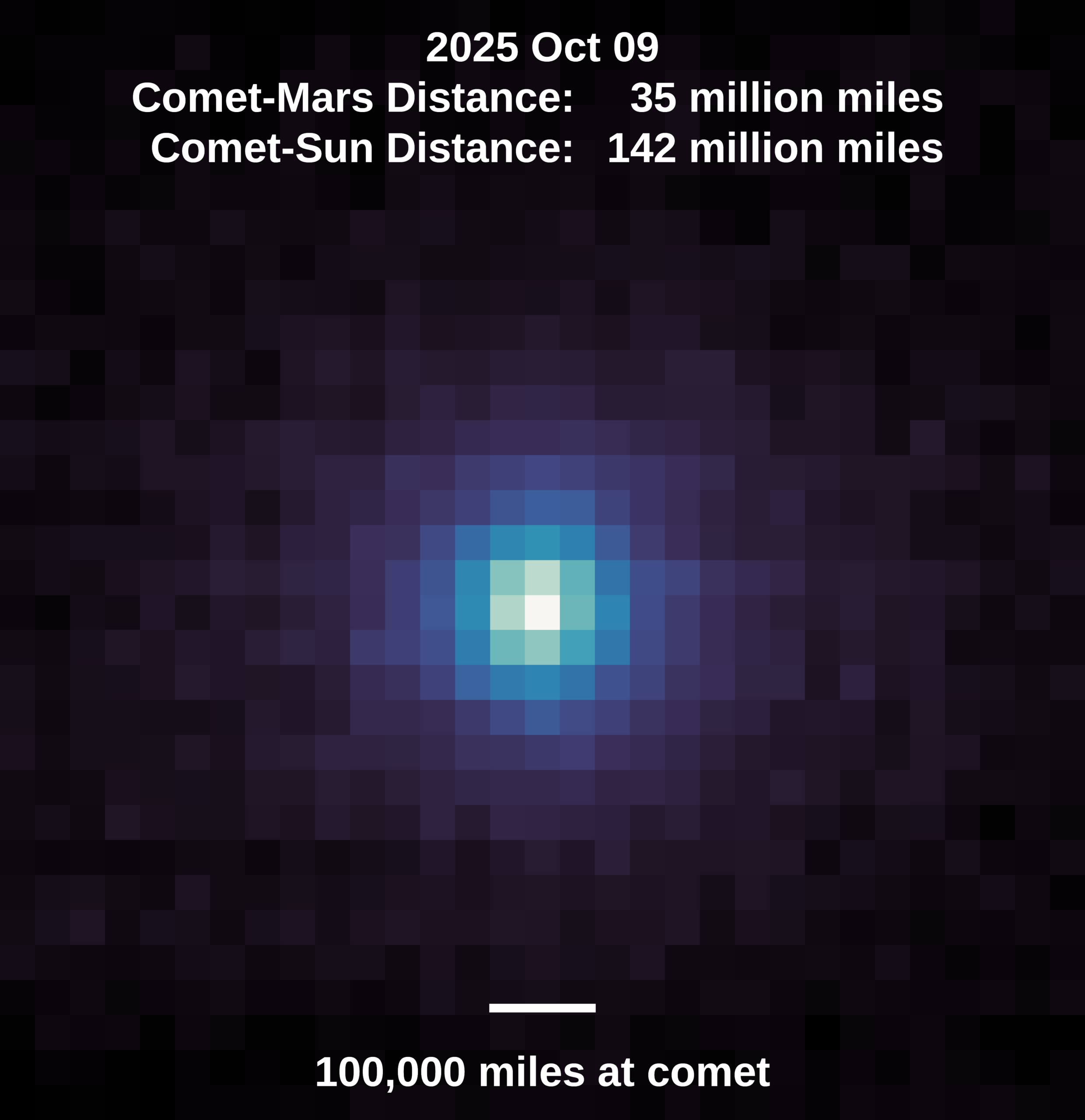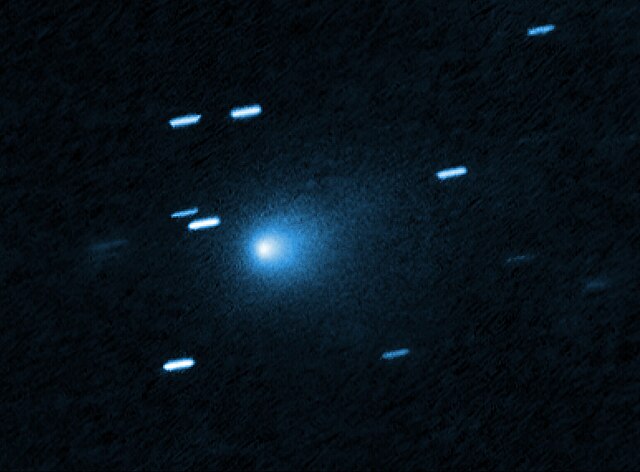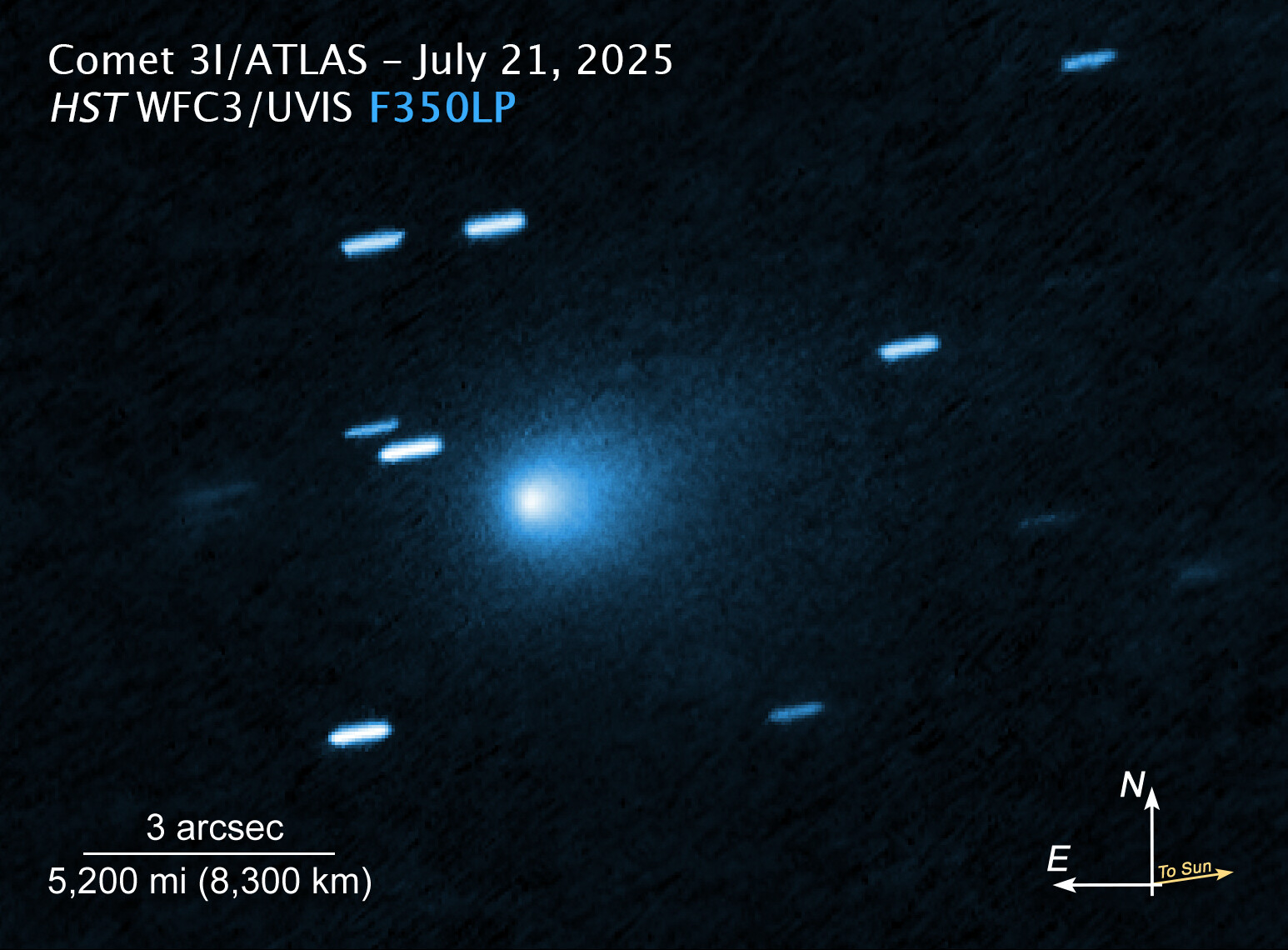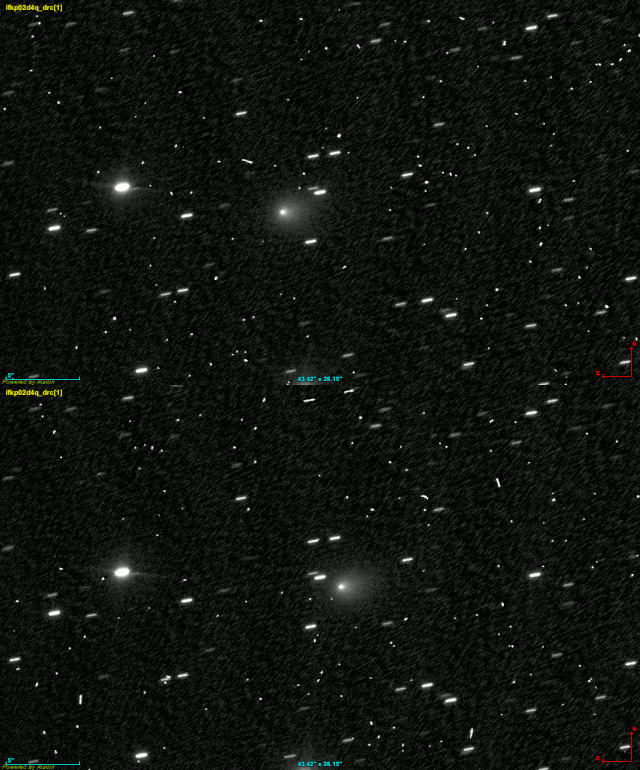



His comments, delivered on November 4, 2025, represent the latest scientific perspective on an object that has captivated both the astronomical community and UFO researchers since its detection by NASA in July 2025.
The controversy surrounding 3I/ATLAS echoes the intense scrutiny faced by 'Oumuamua, the first confirmed interstellar object detected in 2017, which prompted Harvard astronomer Avi Loeb to suggest it might represent alien technology. Now, as the third known interstellar visitor traverses our solar system, the question resurfaces: Are we witnessing natural phenomena, or could these objects represent something far more extraordinary?
What distinguishes 3I/ATLAS from typical solar system bodies has fueled speculation among researchers investigating unconventional hypotheses. The object's hyperbolic trajectory confirms its extrasolar origin—it approached our solar system from interstellar space and will eventually return to the cosmic void after its brief passage through our stellar neighborhood.
However, trajectory alone doesn't explain the intense interest from the UAP research community. Several characteristics have elevated 3I/ATLAS from mere astronomical curiosity to potential candidate for technological origin:
Following its perihelion passage—the closest approach to the Sun—3I/ATLAS exhibited brightening patterns that exceeded astronomical predictions based on conventional cometary models. While Cox and mainstream astronomers attribute this to natural outgassing from solar heating, some researchers note that the magnitude and timing of these brightness changes don't perfectly match expected behavior for ice sublimation.
This anomaly recalls 'Oumuamua's unexpected acceleration as it departed the solar system, which Loeb argued was inconsistent with cometary outgassing and potentially indicated artificial propulsion. While 3I/ATLAS hasn't demonstrated similar acceleration anomalies, its optical behavior continues generating questions.
Spectroscopic analysis of 3I/ATLAS has revealed chemical signatures distinct from typical solar system comets. While Cox emphasizes these differences reflect formation in a different stellar environment billions of years ago, alternative researchers suggest the compositional profile doesn't cleanly match any known natural body category.
The object exhibits what some describe as an unusual albedo—the measure of how much light a surface reflects. Combined with its brightness variations, this has led to speculation about surface properties inconsistent with rocky or icy composition. Could these characteristics indicate constructed materials rather than natural formation?
Cox's response to alien spacecraft theories employs the fundamental principle that extraordinary claims require extraordinary evidence. His position rests on several key arguments that represent mainstream astronomical consensus:
Modern astronomical instruments can detect various signatures that would indicate artificial construction or technological function. Cox emphasizes that 3I/ATLAS exhibits none of these telltale signs:
Cox argues that while 3I/ATLAS presents interesting scientific puzzles, nothing about its behavior or composition requires abandoning natural explanations. Interstellar objects represent samples from planetary systems formed under different conditions than our own solar system. Expecting them to match solar system norms precisely would be scientifically naive.
The physicist points to the danger of "god of the gaps" reasoning—inserting exotic explanations wherever scientific understanding remains incomplete. Historical precedent shows that anomalies in astronomical observation typically resolve through improved understanding of natural processes rather than revolutionary paradigm shifts.
Not all credentialed scientists share Cox's confidence in conventional explanations. Harvard's Avi Loeb, chairman of the Department of Astronomy, has consistently argued that the scientific community displays excessive conservatism when considering technological explanations for anomalous objects.
Loeb's position, which he's applied to both 'Oumuamua and now 3I/ATLAS, contends that:
While Loeb hasn't made definitive claims about 3I/ATLAS specifically, his methodology suggests anomalous characteristics deserve investigation of both natural and artificial hypotheses in parallel.
For researchers investigating Unidentified Anomalous Phenomena, interstellar objects like 3I/ATLAS raise provocative questions about detection capabilities and observational bias. If non-human technology visits our solar system, how would we distinguish it from natural phenomena?
The UAP discussion has increasingly focused on transmedium objects—phenomena demonstrating capability across multiple environments including space, atmosphere, and water. Interstellar visitors transitioning through our solar system represent the ultimate transmedium trajectory, moving from interstellar space through our planetary system and back to the cosmic void.
A troubling reality confronts both astronomers and UAP researchers: Our detection capabilities remain extremely limited. We identify interstellar objects only through chance encounters when they pass relatively close to Earth. How many similar objects traverse the outer solar system completely undetected?
If a technological civilization wanted to study our solar system, sending probes disguised as natural objects—or genuinely incorporating natural materials—would provide effective camouflage against detection. The "alien spacecraft" hypothesis doesn't require obvious engineering; subtle technological components embedded within otherwise natural structures might prove virtually indistinguishable from genuine comets or asteroids.
The debate between Cox and researchers entertaining technological explanations reveals fundamental questions about scientific methodology when confronting potentially paradigm-shifting evidence.
Cox's position represents epistemic conservatism—the principle that existing theoretical frameworks should be modified only when evidence overwhelmingly demands it. This approach has served science well, preventing premature acceptance of extraordinary claims based on insufficient evidence.
However, critics argue this conservatism can ossify into dogmatism, creating institutional resistance to genuinely revolutionary discoveries. The history of science includes numerous examples where mainstream consensus delayed recognition of transformative findings because they contradicted established paradigms.
Both sides of this debate agree that definitive evidence could resolve the question. What would such evidence look like?
For an object like 3I/ATLAS to be recognized as technological, scientists would need to observe:
Absent these signatures, mainstream science will continue classifying interstellar visitors as natural phenomena regardless of anomalous characteristics that resist easy explanation.
Perhaps the most important question transcends whether 3I/ATLAS specifically represents technology: Are our observation protocols and theoretical frameworks adequate to identify technological artifacts if they exist?
The Galileo Project, initiated by Avi Loeb, represents one attempt to address this gap. By deploying sensor networks specifically designed to detect and characterize anomalous objects with open consideration of technological possibilities, the project acknowledges that discovery requires looking.
Brian Cox's skepticism serves the vital scientific function of maintaining evidentiary standards. However, as more interstellar objects are detected—the Vera C. Rubin Observatory will dramatically increase discovery rates—the community must ensure that legitimate anomalies receive thorough investigation rather than reflexive classification as natural phenomena.
The controversy surrounding 3I/ATLAS illustrates healthy scientific debate about extraordinary possibilities. Brian Cox's evidence-based skepticism represents responsible science, while researchers like Avi Loeb ensure that technological hypotheses receive consideration.
As 3I/ATLAS continues its journey back to interstellar space, it carries unanswered questions. Whether those questions ultimately reveal new natural phenomena or something far more extraordinary depends on continued observation, rigorous analysis, and willingness to follow evidence wherever it leads—even to uncomfortable conclusions.
The truth about interstellar visitors likely lies in data yet to be collected, from objects yet to be discovered. Until then, the mystery endures.