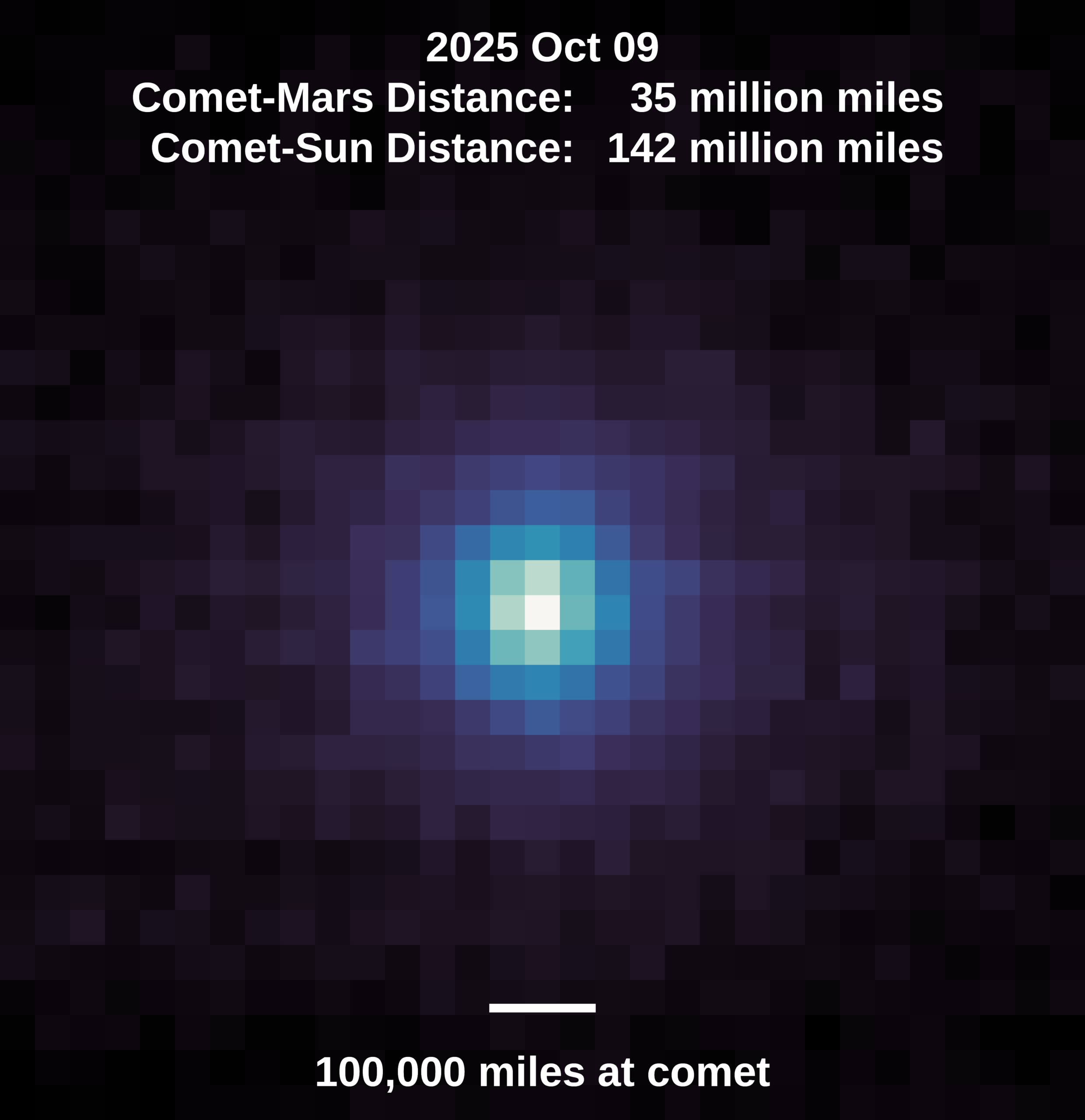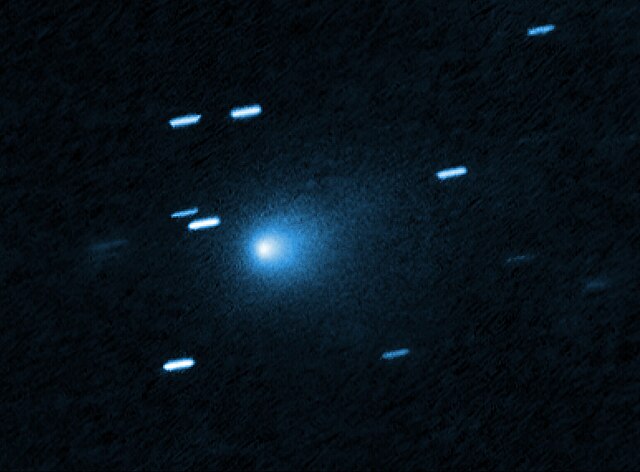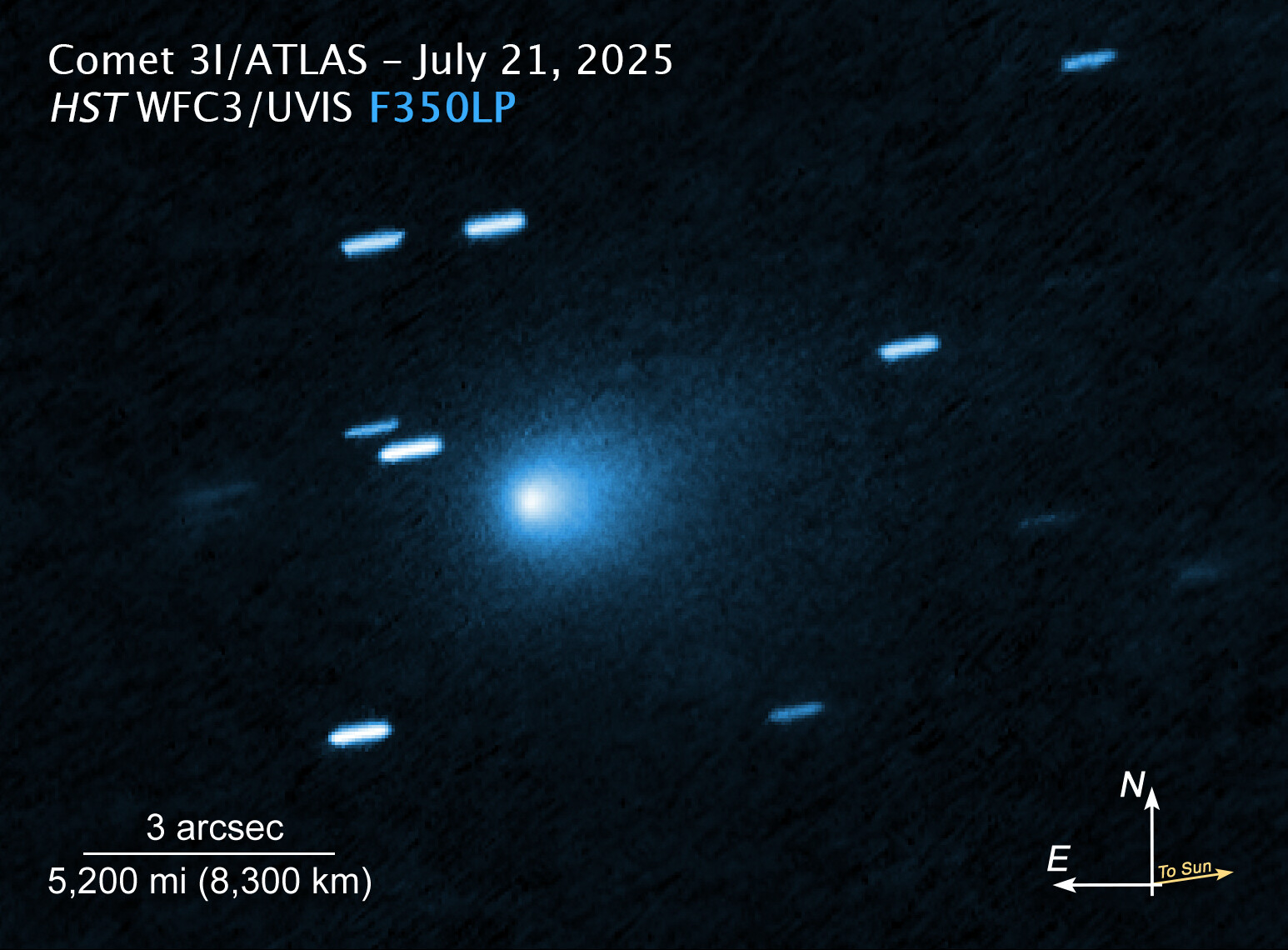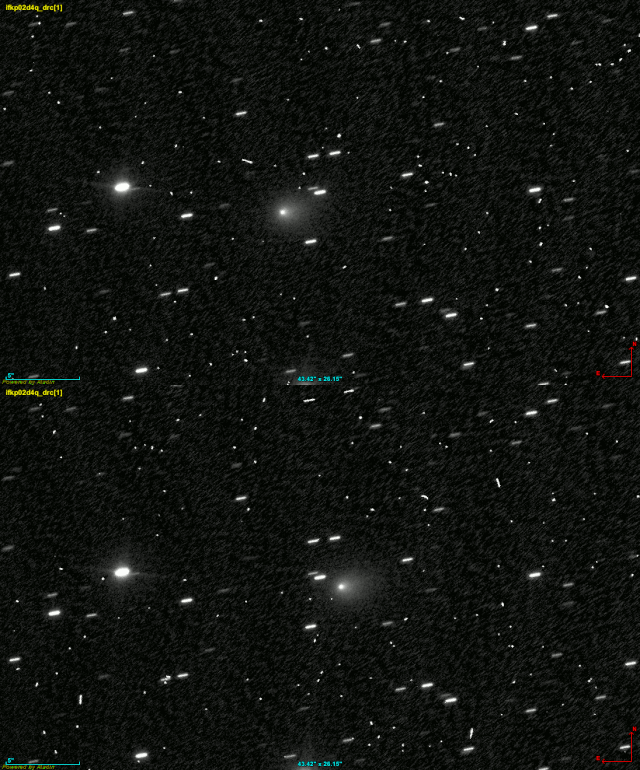



The short answer is no. While 3I Atlas exhibits some puzzling features, attributing them to alien intelligence requires ignoring more plausible explanations, misunderstanding how science evaluates evidence, and forgetting important lessons from previous interstellar objects. Let's examine why the alien spacecraft hypothesis fails on multiple levels.
This isn't the first time an interstellar object has sparked alien speculation. When 'Oumuamua was discovered in 2017, its elongated shape and unexpected acceleration led some researchers—most notably Harvard astronomer Avi Loeb—to propose it might be an artificial light sail.
The theory generated enormous media attention and public excitement. Here was a respected scientist from an elite institution suggesting we'd detected alien technology. The hypothesis seemed plausible to many because 'Oumuamua's characteristics did appear unusual compared to known asteroids and comets.
Yet subsequent analysis by the broader astronomical community found natural explanations far more convincing. The acceleration could be explained by outgassing—material boiling off the object's surface as it approached the sun, creating a weak rocket effect. The lack of a visible comet tail didn't rule out this explanation; hydrogen outgassing would be invisible to optical telescopes but could still produce the observed acceleration.
The shape, while unusual, wasn't impossible for natural objects. Simulations showed that bodies subjected to tidal forces or collisions could fragment into elongated configurations. The reflectivity variations matched what you'd expect from a tumbling, irregularly-shaped object with varying surface compositions.
Most tellingly, 'Oumuamua behaved exactly as a passive object should. It tumbled chaotically rather than maintaining stable orientation. It didn't alter course or emit signals. It didn't slow down to investigate anything of interest. Every observation was consistent with a natural body following ballistic trajectory through space.
The 'Oumuamua episode taught the astronomical community an important lesson: unusual doesn't mean artificial. When we encounter something we haven't seen before, the scientific approach is to propose natural explanations and test them rigorously before jumping to exotic conclusions. With 3I Atlas, we're making the same mistakes.
Carl Sagan famously said that extraordinary claims require extraordinary evidence. The assertion that 3I Atlas represents alien technology is about as extraordinary as claims get. It would mean that intelligent life exists elsewhere in the universe, has developed interstellar travel capability, and has sent probes to our solar system.
Each of these propositions is individually unlikely given what we know. Together, they require evidence that's absolutely compelling—not just "we can't easily explain this," but "no natural explanation is remotely plausible."
What evidence do proponents of the alien hypothesis offer? Primarily, they point to 3I Atlas's acceleration patterns and reflectivity variations. The object appeared to speed up and slow down in ways that don't obviously fit cometary outgassing. Its brightness fluctuated in patterns some found unusual.
But here's the problem: unexplained doesn't mean unexplainable. Our understanding of interstellar objects is based on a sample size of three. We have 'Oumuamua, Comet 2I/Borisov, and now 3I Atlas. Drawing firm conclusions about what's "normal" from three examples is statistically absurd.
Imagine if we'd only ever seen three dogs, and they happened to be a Chihuahua, a Great Dane, and a Poodle. Would we declare that any fourth dog not matching those specific types must be artificial? Of course not. We'd recognize that our sample size is far too small to establish what constitutes normal variation.
The same principle applies to interstellar objects. We don't yet know the full range of behaviors, compositions, and characteristics these bodies can exhibit. Declaring something artificial because it doesn't match our limited preconceptions is premature at best and scientifically irresponsible at worst.
One of the most frustrating aspects of the alien spacecraft hypothesis is that it prematurely closes off investigation of genuinely interesting natural phenomena. When we declare something artificial, we stop asking what natural processes might produce these observations.
3I Atlas's acceleration patterns could result from asymmetric outgassing that varies based on solar heating of an irregular surface. If the object has a complex shape with different composition regions, material could sublimate preferentially from certain areas as the object rotates. This would create thrust that changes direction as the object tumbles, producing acceleration patterns that seem erratic from our vantage point.
The reflectivity variations might indicate surface heterogeneity—regions with different ice-to-rock ratios, different mineral compositions, or different degrees of space weathering. Interstellar objects travel through the galaxy for millions or billions of years, exposed to cosmic rays and interstellar dust. The effects of this long-duration exposure on surface properties remain poorly understood.
Another possibility is that 3I Atlas is fragmenting. Thermal stress from solar approach can crack and break apart loosely-bound objects. If the body is shedding smaller pieces, this would affect both its observed brightness and its trajectory. The fragments themselves might be too small to detect individually but collectively could create observable effects.
We also don't fully understand how interstellar objects differ from solar system natives. Objects that formed around other stars experienced different conditions—different stellar radiation, different chemical abundances, different temperature histories. These differences could produce materials with properties we haven't encountered in asteroids and comets that formed locally.
Proposing the alien hypothesis bypasses all these fascinating scientific questions. Instead of asking "what natural processes produce these observations?" we simply say "aliens did it" and move on. This is intellectually lazy and scientifically unproductive.
The alien probe theory also collides with a fundamental puzzle in astrobiology: the Fermi Paradox. If intelligent civilizations are common enough that we're detecting their probes in our solar system, why isn't evidence of their existence overwhelming and obvious?
Our galaxy is approximately 13 billion years old. Earth is only 4.5 billion years old. If technological civilizations arise with any regularity, many should be millions or billions of years more advanced than us. Such civilizations would have had ample time to colonize or at least thoroughly explore the galaxy.
Yet we see no evidence of this. No obvious megastructures. No clearly artificial signals in our radio searches. No unambiguous signs of astroengineering projects. The galaxy appears remarkably empty of intelligent life.
Proponents of the probe hypothesis might argue that 3I Atlas is exactly the kind of evidence we should expect—subtle, easily missed, requiring careful analysis to recognize. But this doesn't hold up. If civilizations are launching interstellar probes, they're presumably doing so to gather information. Probes designed to be detected would be far more useful than ones that look like space rocks.
The stealth probe concept makes even less sense when you consider the distances and timescales involved. Any civilization capable of interstellar travel has technology so far beyond ours that hiding from us would be trivial if desired. But if they're here to observe, making their presence known would accelerate gathering information about how we respond to contact.
The most parsimonious resolution to the Fermi Paradox is that technological civilizations are extremely rare, possibly unique to Earth. In this framework, expecting to detect alien probes in our solar system becomes vanishingly unlikely. Natural explanations for unusual observations become infinitely more probable by comparison.
Another issue plaguing the alien hypothesis is observation bias. We notice unusual objects precisely because they're unusual. This creates a distorted sample where the things we pay most attention to are by definition atypical.
Think about how 3I Atlas was detected in the first place. Automated survey systems scan the sky looking for moving objects. Most detections are routine—known asteroids, comets following expected orbits. These generate brief catalog entries and no public attention.
Objects with unusual characteristics trigger additional observation. They get written up in papers. They attract media coverage. They generate public discussion. This attention makes them seem more significant than they may actually be.
If interstellar objects pass through the solar system regularly—and statistical models suggest they do—we're only catching the tiny fraction that happen to pass close enough and bright enough for detection. The objects we spot may not be representative of the broader population. They might be the outliers, the unusual cases that deviate from typical interstellar body characteristics.
3I Atlas attracted attention partly because previous interstellar objects had already sensitized the astronomical community to look for such visitors. We're now actively hunting for these objects rather than stumbling across them accidentally. This increased vigilance means we're finding more unusual objects, but that doesn't mean unusual objects are actually more common.
It's worth noting that the overwhelming majority of professional astronomers studying 3I Atlas don't believe it's artificial. The alien hypothesis gets media attention because it's exciting and generates clicks, but within the scientific community, it's a minority position at best.
Most researchers studying interstellar objects focus on natural explanations. They're analyzing composition, modeling thermal stress effects, calculating trajectory perturbations, and comparing observations with simulations of natural body behavior. This work is less sensational than alien speculation but far more likely to advance genuine understanding.
The few scientists willing to seriously entertain the artificial hypothesis typically do so in carefully hedged terms. They're usually saying "we can't completely rule out this possibility" rather than "this is probably artificial." There's a vast difference between acknowledging that we can't achieve 100% certainty about natural origin and actually advocating for extraterrestrial technology as the most likely explanation.
Science journalism often fails to convey these nuances. A quote like "we cannot entirely exclude the possibility" becomes a headline reading "Scientists Say Object Could Be Alien Probe." This distortion creates public misperception about the state of scientific consensus.
Rather than prematurely declaring 3I Atlas artificial, the scientific community should focus on gathering better data about interstellar objects generally. We need larger sample sizes, more detailed observations, and systematic study of how these bodies behave.
Proposed missions like the Comet Interceptor, designed to rapidly deploy to newly-discovered objects, could revolutionize our understanding. Close-up observation and direct sampling would answer questions that remain ambiguous from distant telescope observations.
Improved detection networks would help us spot interstellar visitors earlier, providing more time for detailed study. Statistical analysis of multiple objects would clarify which characteristics are truly unusual versus which represent normal variation we simply hadn't yet observed.
This unglamorous but essential work will ultimately tell us whether 3I Atlas is genuinely anomalous or simply the first example we've seen of a natural phenomenon that's actually quite common. Either outcome would be scientifically valuable. Jumping to alien conclusions prematurely short-circuits this process.
The alien spacecraft hypothesis for 3I Atlas fails on multiple grounds. It requires extraordinary leaps from limited evidence. It ignores more plausible natural explanations. It contradicts what we'd expect given the Fermi Paradox. It mistakes unusual for impossible. And it's rejected by most scientists actually studying the object.
This doesn't mean we should never consider artificial origins for unusual objects. If evidence accumulated that genuinely ruled out natural explanations, intellectual honesty would require taking the artificial hypothesis seriously. But we're nowhere close to that threshold with 3I Atlas.
The cosmos is filled with natural wonders that challenge our understanding and expand our knowledge. Interstellar objects offer unprecedented opportunities to study matter that formed in entirely different stellar environments. They're fascinating precisely because they're natural phenomena we're only beginning to understand.
Let's appreciate 3I Atlas for what it almost certainly is: a remarkable natural object carrying information about distant star systems and the processes that shape planetary bodies throughout the galaxy. That's extraordinary enough without inventing aliens.