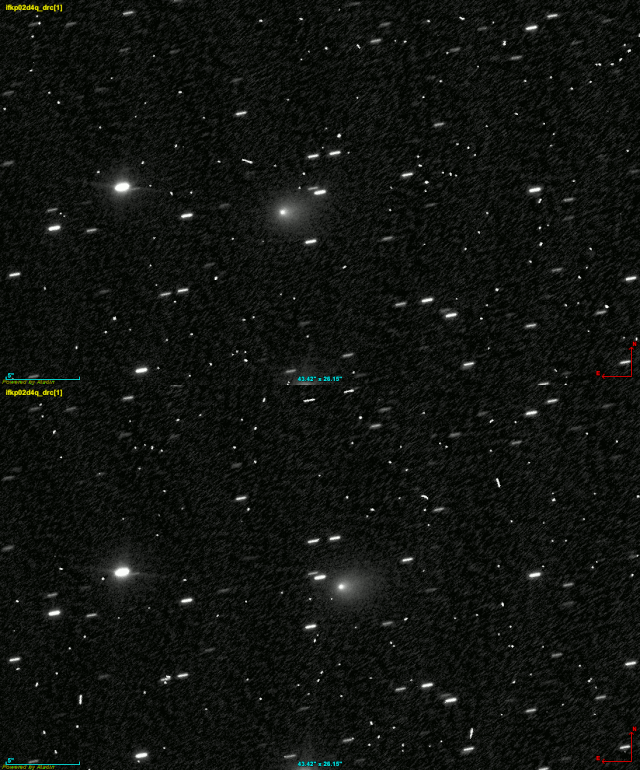



The request highlights an expanding debate about public access to scientific discoveries funded by taxpayer dollars and whether government agencies are obligated to share findings that could reshape our understanding of the cosmos.
When 3I/ATLAS was first detected passing through our solar system in 2017, it immediately captured the attention of astronomers worldwide. Unlike the countless asteroids and comets that orbit our sun, this visitor originated from beyond our stellar neighborhood, making it only the third confirmed interstellar object ever observed by humanity.
The object's trajectory and composition offered scientists a rare opportunity to study material that formed in an entirely different star system. Each interstellar visitor carries unique isotopic signatures and physical characteristics that can reveal secrets about planetary formation, stellar evolution, and the dynamics of our galactic neighborhood. For researchers studying the building blocks of solar systems, 3I/ATLAS represented an irreplaceable natural experiment delivered directly to our doorstep.
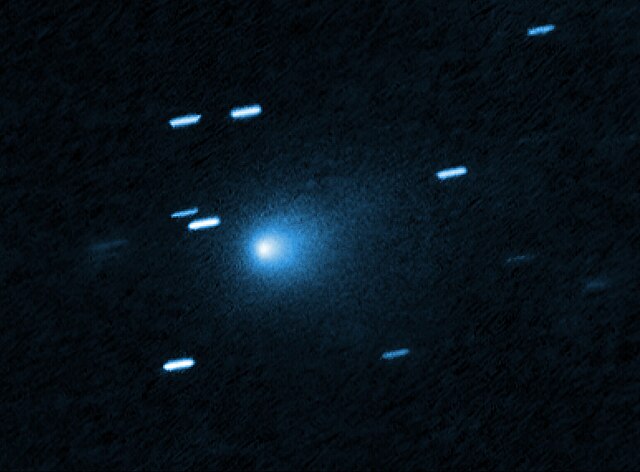
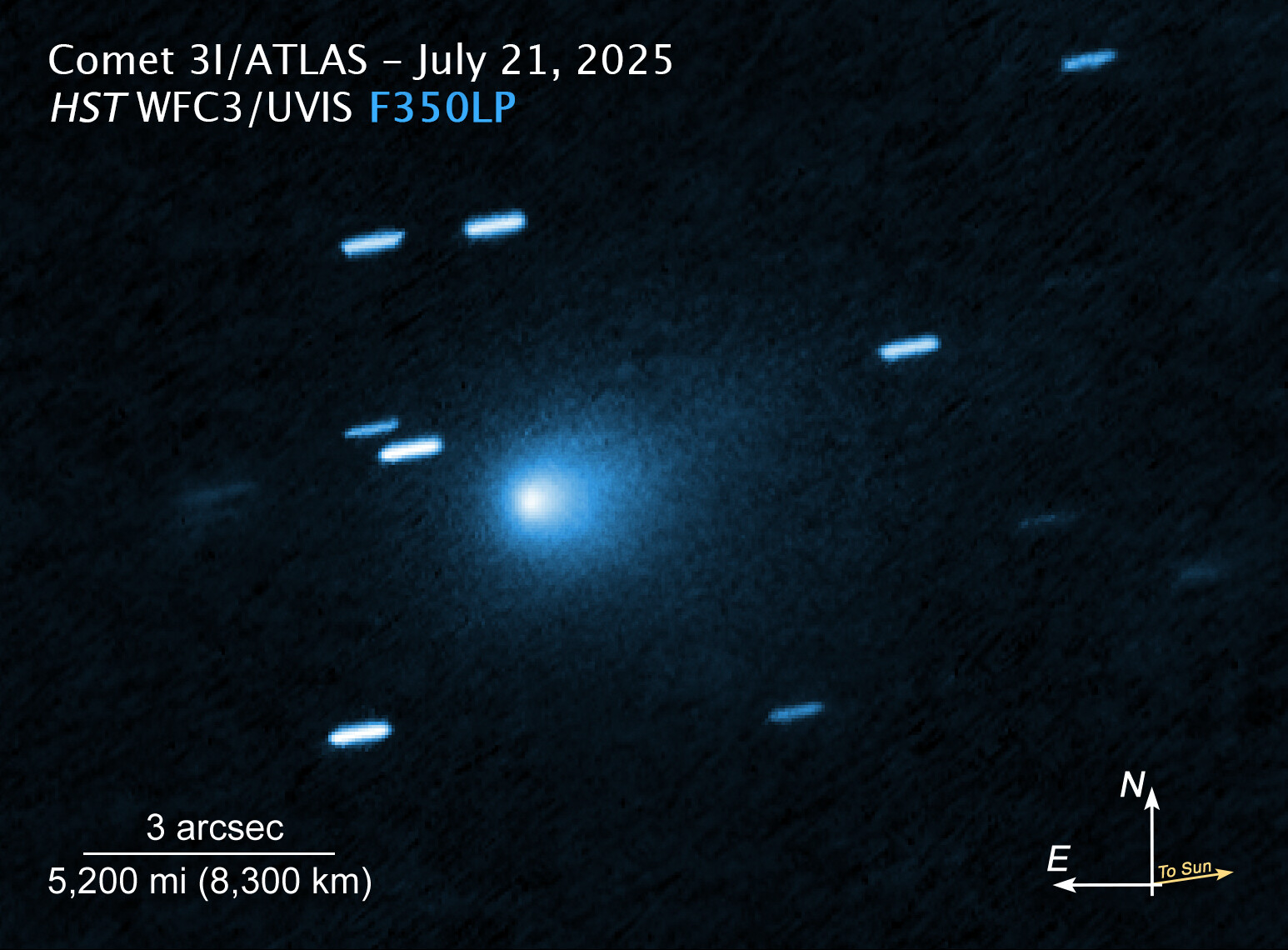
What made 3I/ATLAS particularly intriguing was its behavior during solar approach. Observations suggested unusual acceleration patterns and reflective properties that didn't neatly align with typical cometary activity. These anomalies sparked intense scientific debate about the object's composition and structure, with some researchers proposing exotic explanations while others argued for more conventional interpretations involving outgassing or fragmentation.
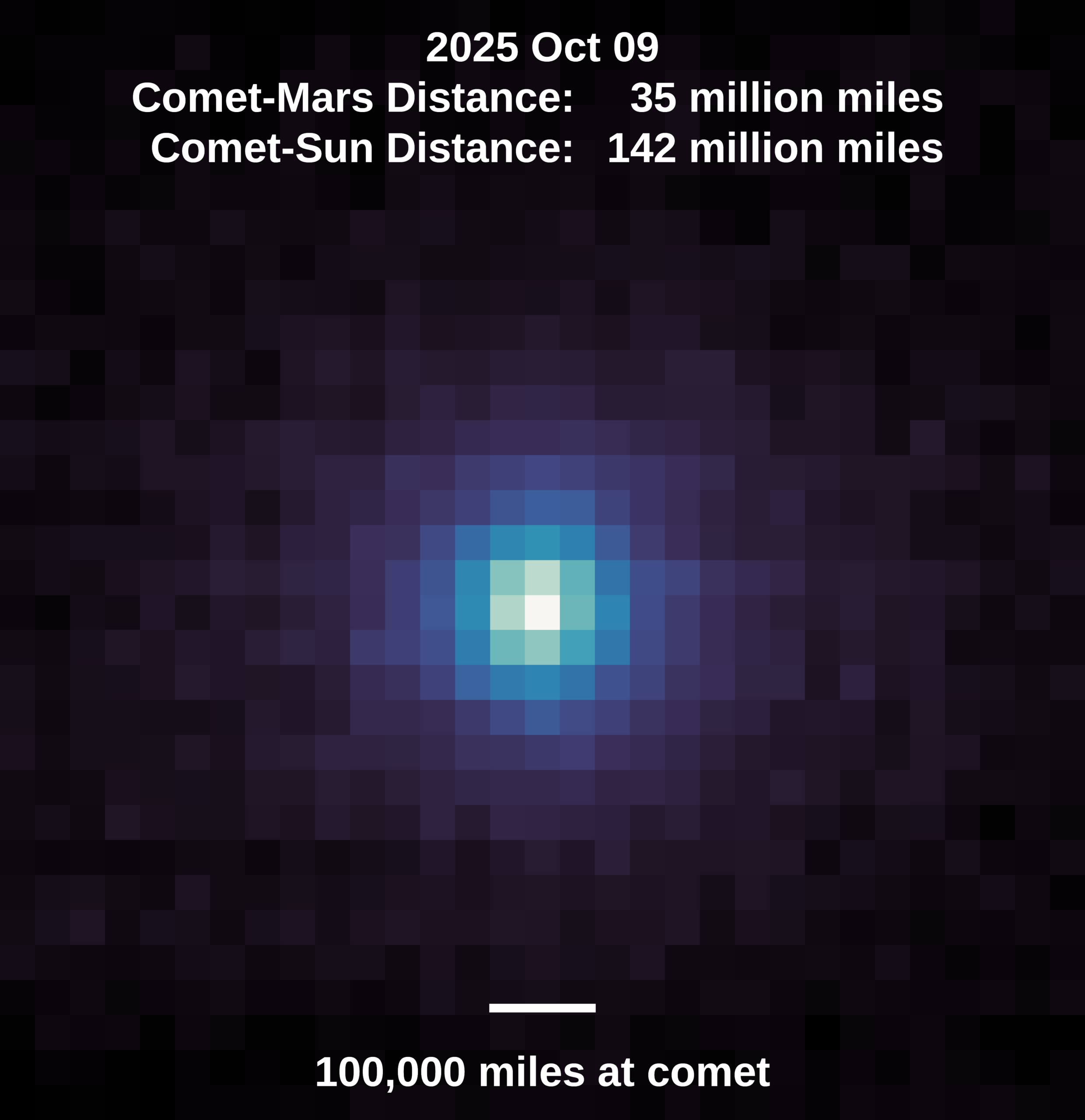
In a formal letter addressed to acting NASA Administrator Sean Duffy, Luna articulated a straightforward argument: when public funding drives scientific discovery, the public deserves access to the results. The request specifically calls for the release of all observational data collected during 3I/ATLAS's passage, including high-resolution photographs, telemetry readings, spectroscopic analysis, and any scientific conclusions drawn from the investigation.
"As a society that heavily invests in space exploration, we deserve accessible information that can spark further research and understanding among the general populace," Luna stated in the letter, echoing a sentiment that's gained traction among transparency advocates and citizen science communities.
The appeal arrives at a moment when questions about government transparency extend well beyond space research. From healthcare data to climate science, debates rage about what information should be publicly available and what legitimate reasons exist for restricted access. Luna's letter positions the 3I/ATLAS data release within this broader context of democratic accountability and scientific openness.
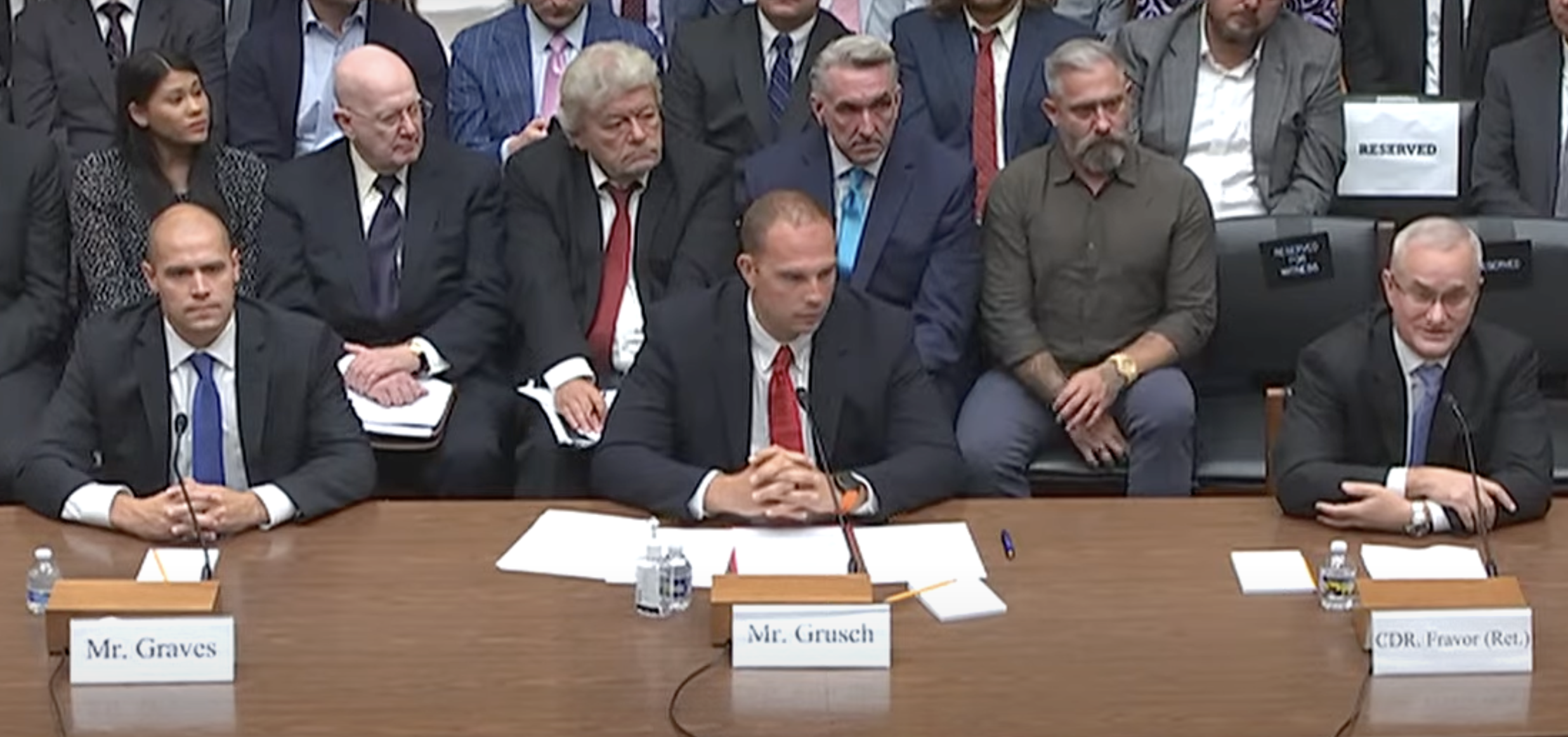
The timing also coincides with renewed public interest in interstellar objects and unusual aerospace phenomena. Recent Congressional hearings on unidentified aerial phenomena have normalized conversations about unexplained observations, creating an environment where requests for transparency receive more serious consideration than they might have a decade ago.
Understanding why this data matters requires appreciating what interstellar objects can teach us. When 3I/ATLAS formed around another star billions of years ago, it incorporated elements and isotopes in ratios that reflect conditions in that distant stellar system. By analyzing these chemical fingerprints, scientists can essentially conduct astronomy in reverse—using the object itself as a messenger carrying information about its birthplace.
Recent advances in spectroscopic analysis have made it possible to determine not just what elements are present in distant objects, but their precise isotopic ratios. This level of detail allows researchers to distinguish between material that formed in different environments, potentially revealing whether 3I/ATLAS originated from a star system similar to our own or something radically different.
The object's physical structure also holds clues. Is it a solid body or a loosely-bound rubble pile? Did it originate as part of a larger planetesimal that was ejected during planetary migration, or does it represent primordial material that never coalesced into larger bodies? These questions have profound implications for theories about how planetary systems form and evolve.
Additionally, studying how 3I/ATLAS responded to solar heating provides insights into its composition and internal structure. Objects behave differently under thermal stress depending on whether they're primarily ice, rock, metal, or some combination. The acceleration patterns that made 3I/ATLAS anomalous might simply reflect asymmetric outgassing from an irregular surface, or they could indicate something more unusual about its makeup.
Luna's call for data release taps into the growing power of citizen science in astronomical research. Amateur astronomers equipped with increasingly sophisticated equipment have made genuine contributions to professional astronomy, discovering comets, tracking asteroids, and monitoring variable stars. When professional datasets become publicly available, these enthusiasts can conduct their own analyses, sometimes spotting patterns that busy researchers missed.
The discovery of interstellar object 'Oumuamua in 2017 demonstrated this collaborative potential. While professional observatories provided the initial detection and tracking, amateur astronomers worldwide contributed follow-up observations that helped constrain the object's trajectory and characteristics. This distributed observation network proved invaluable for an object that appeared and vanished quickly.
Educational institutions also benefit enormously from access to real scientific data. Students studying astronomy gain far more from analyzing actual observations than from working with sanitized textbook examples. When NASA releases datasets publicly, professors worldwide can incorporate cutting-edge science into their curricula, inspiring the next generation of researchers.
The democratization of space science serves another crucial function: it builds public support for continued funding. When citizens can see and interact with the discoveries their tax dollars enable, they develop personal investment in space exploration's success. This creates a virtuous cycle where public engagement generates political support, which enables more ambitious missions, which produce more fascinating discoveries.
The space agency has long maintained a tradition of public data release that distinguishes it from many government organizations. Images from the Hubble Space Telescope become available to the public shortly after capture. Mars rover photographs appear online within days of being taken. Scientific papers based on NASA missions regularly include data tables and supplementary materials that allow independent verification.
This openness reflects both philosophical commitment and practical necessity. NASA's founding legislation included provisions requiring the widest practical dissemination of its findings. The agency's legitimacy depends partly on its ability to demonstrate that taxpayer investment yields tangible returns in the form of knowledge and inspiration.
The policy has generated remarkable dividends. Hubble images have become cultural touchstones, appearing in museums, classrooms, and even on commercial products. The beauty and wonder these images evoke have sustained public interest in space exploration through budget cuts and policy shifts. This wouldn't be possible if NASA hoarded its most compelling discoveries.
However, transparency has limits even at NASA. National security considerations sometimes restrict release of technical details about propulsion systems or sensor capabilities. International agreements govern access to certain planetary data. Proprietary concerns arise when private companies partner with NASA on missions. Balancing these competing interests requires careful judgment.
NASA has acknowledged Luna's request and indicated it's reviewing the implications of releasing the requested 3I/ATLAS data. This review process involves assessing what information exists, whether any legitimate restrictions apply, and how to make the data accessible in useful formats.
Historically, NASA's response to public data requests has been generally positive. The agency maintains extensive online archives where decades of mission data can be accessed freely. Systems like the Planetary Data System organize observations from various missions in standardized formats that researchers can analyze using common tools.
The challenge often involves making data comprehensible to non-specialists. Raw telemetry files require specialized software and knowledge to interpret. Calibrated images still need context about exposure settings, filters used, and processing steps applied. NASA has invested in developing interfaces that make this information more accessible, but gaps remain.
For 3I/ATLAS specifically, the question becomes whether NASA collected data beyond what has already been published in scientific journals. Peer-reviewed papers about the object have included substantial analysis and many data tables. If additional observations exist that haven't been formally published, Luna's request would apply to this supplementary material.
The interstellar object's rapid passage created time constraints that limited observation opportunities. Unlike asteroids that orbit predictably for years, 3I/ATLAS appeared briefly and then departed. This urgency meant that not all data could be fully analyzed before the object became too faint to observe. Unreleased observations might exist simply because researchers haven't yet extracted all possible information from them.
Luna's appeal reflects broader societal expectations about scientific accountability. In an era where misinformation spreads rapidly and institutional trust faces challenges, transparency becomes essential for maintaining credibility. When research organizations operate behind walls of secrecy, even innocent decisions can appear suspicious.
The accountability question extends beyond just releasing data. It encompasses explaining methodology, acknowledging uncertainties, and admitting mistakes. Science advances through self-correction, but this process only works if the underlying information is available for scrutiny. Published papers represent conclusions; the data beneath them holds the evidence that supports or undermines those conclusions.
For space science specifically, accountability matters because the investments involved are substantial. NASA's budget runs into billions of dollars annually. Justifying continued funding requires demonstrating that these resources generate valuable returns. Public access to discoveries helps make this case tangible rather than abstract.
The relationship between transparency and scientific progress isn't always straightforward. Sometimes premature release of incomplete data generates misunderstandings that are difficult to correct. Researchers need time to properly analyze observations before subjecting their work to public scrutiny. Finding the right balance between openness and allowing proper scientific process remains an ongoing challenge.
NASA's deliberation over the 3I/ATLAS data release must navigate several legitimate concerns that complicate straightforward transparency. While the agency's default position favors openness, certain circumstances justify restricted access.
National security considerations rarely apply to astronomical observations, but they can affect how data was collected. If classified sensor capabilities were used to track the object, releasing raw data might reveal technical specifications that adversaries could exploit. This concern applies more to objects in Earth orbit than distant interstellar visitors, but classification reviews must still occur.
Proprietary interests arise when commercial partners contribute instruments or analysis to NASA missions. Private companies investing in space technology development reasonably expect some return on that investment. If data generated using proprietary sensors or methods is released immediately, it could undermine the business models that enable commercial space innovation.
International collaboration adds another layer of complexity. Many NASA observations involve partnerships with space agencies from other countries. These agreements often include provisions about data sharing and release timing. Unilateral release by NASA might violate these agreements and damage relationships essential for future cooperation.
The fascination with 3I/ATLAS exists within a larger cultural moment of intense interest in interstellar visitors and unexplained phenomena. 'Oumuamua's discovery in 2017 sparked global attention partly because its unusual characteristics defied easy explanation. When Harvard astronomer Avi Loeb suggested it might be artificial, the speculation went viral despite most scientists favoring natural explanations.
This heightened interest creates both opportunities and challenges for NASA. Public fascination can translate into support for space exploration funding and inspire young people to pursue scientific careers. But it can also generate unrealistic expectations about what space observations can definitively prove.
The agency must communicate that science often produces ambiguous results requiring multiple lines of evidence for resolution. Initial observations raise questions; answers emerge through sustained investigation. This incremental process lacks the dramatic revelation that public imagination craves but represents how genuine discovery actually works.
For 3I/ATLAS, releasing comprehensive data would allow the scientific community to conduct more thorough analysis than any single research group could accomplish. Distributed expertise across multiple institutions often yields insights that centralized analysis misses. This crowd-sourcing of scientific investigation has become increasingly valuable as datasets grow more complex.
Luna's appeal and NASA's response will likely unfold over coming months. The review process involves coordination across multiple divisions, assessment of what data exists, and determination of what can be released without compromising legitimate interests.
If NASA decides to release substantial new information about 3I/ATLAS, it would set a precedent for handling future interstellar object observations. The next such visitor will attract similar public interest, and establishing clear protocols for data sharing now would streamline responses to future requests.
The outcome also signals NASA's broader approach to transparency in an era of heightened public scrutiny. Space agencies worldwide watch how NASA navigates these questions, often following its lead on policies regarding data access and scientific openness.
For the astronomical community, the resolution affects more than just this single object. It establishes expectations about whether publicly-funded research generates truly public knowledge or remains controlled by the institutions and individuals who conducted the observations.
The debate over 3I/ATLAS data release encapsulates fundamental questions about the relationship between scientific institutions and the public they serve. Luna's call for transparency represents growing expectations that discoveries funded by taxpayer dollars should be accessible to taxpayers. NASA's deliberative response reflects the genuine complexities involved in balancing openness with legitimate restrictions.
Interstellar objects like 3I/ATLAS offer irreplaceable opportunities to study the universe beyond our solar system. Each visitor carries information about distant stellar environments and the processes that shape planetary systems. Making this information widely available enables scientific progress while inspiring public engagement with space exploration.
As humanity stands at the threshold of becoming a spacefaring civilization, the principles we establish now about transparency and accountability will shape the future of space science. Whether the mysteries of 3I/ATLAS ultimately prove mundane or extraordinary, the conversation about access to that knowledge matters profoundly.
The cosmos continues sending messengers through our solar system. How we handle the information they carry will determine not just what we learn about the universe, but who gets to participate in that learning. Luna's appeal asks NASA to affirm that space belongs to everyone, and its discoveries should too.